✓ Surrealism originated in Paris in the 1920s, rooted in Dada.
✓ It sought to unleash the creative potential of the unconscious mind.
✓ Key figures include André Breton, Salvador Dalí, and René Magritte.
✓ Techniques like automatism and dream imagery were central to its practice.
How It Works
1
Embrace the Unconscious
Surrealists believed true creativity stemmed from the subconscious. They explored dreams, automatic writing, and free association to bypass rational thought.
2
Defy Logic and Reality
Artworks juxtapose disparate objects and scenes in illogical ways. This deliberate disruption of reality aims to provoke thought and reveal deeper truths.
3
Challenge Societal Norms
Beyond aesthetics, Surrealism was a philosophical and political movement. It critiqued bourgeois values and advocated for personal and societal liberation.
4
Interpret Personal Symbolism
While common motifs exist, many surrealist works are deeply personal. Viewers are invited to interpret the symbols and narratives through their own experiences.
The Birth of a Movement: Defining Surrealism's Origins
Photo: olia danilevich / Pexels
To truly grasp the meaning of surrealism in art, one must journey back to its tumultuous origins in the aftermath of World War I. Emerging from the ashes of Dada, a nihilistic anti-art movement that questioned all established norms, Surrealism sought not just to destroy but to reconstruct, to find a new reality beyond the mundane. André Breton, the movement's chief theorist and poet, penned the 'Manifesto of Surrealism' in 1924, effectively laying the groundwork for a revolutionary artistic and philosophical endeavor. Breton, deeply influenced by Sigmund Freud's theories of the unconscious mind and dream analysis, believed that conventional society suppressed humanity's most profound impulses and desires. He saw art as a vehicle to liberate these hidden realms, to merge the dream world with reality into a 'surreality' – a term coined by Guillaume Apollinaire.
The initial phase of Surrealism was heavily focused on literary experimentation, particularly 'automatic writing' – a technique where writers would jot down thoughts as they came, without conscious control, to tap into the subconscious. This principle soon extended to visual arts, where artists experimented with 'automatism' in drawing and painting, allowing their hands to move freely, guided by impulse rather than rational intention. This method challenged the traditional notion of the artist as a conscious creator, instead positioning them as a conduit for deeper, often unsettling, truths. The early Surrealists, including Max Ernst, Joan Miró, and André Masson, explored abstract forms and biomorphic shapes that seemed to emerge from a primordial, dreamlike state. They weren't depicting dreams directly but rather the *process* of dreaming, the raw, unfiltered imagery that bypasses the censor of the conscious mind. This foundational period established Surrealism as more than just an art style; it was a radical way of seeing, thinking, and interacting with the world, a direct challenge to the Enlightenment's emphasis on reason and logic. Understanding this genesis is crucial to appreciating the full scope and impact of the movement, as it informs every subsequent development and stylistic variation within Surrealist art. The ambition was nothing less than a total transformation of human experience, a re-enchantment of the world through the lens of the irrational.
Key Characteristics and Artistic Techniques of Surrealism
Photo: Landiva Weber / Pexels
The meaning of surrealism in art is deeply embedded in its distinctive characteristics and the innovative techniques employed by its practitioners. At its core, Surrealism is defined by the juxtaposition of unrelated objects, often in unexpected or unsettling environments. Think of Salvador Dalí's melting clocks in 'The Persistence of Memory' or René Magritte's train emerging from a fireplace in 'Time Transfixed.' These seemingly illogical combinations are not random; they are carefully constructed to evoke a sense of disorientation, to challenge the viewer's perception of reality, and to tap into the subconscious mind's ability to forge connections between disparate elements. The aim is to create a 'poetic shock,' a moment of profound revelation that transcends rational understanding.
Dream imagery is another paramount characteristic. Surrealists believed dreams were the 'royal road to the unconscious,' offering unfiltered access to our deepest desires, fears, and symbolic language. While not all Surrealist art directly depicts dreams, many works possess a dreamlike quality – a blend of the familiar and the fantastical, where gravity might not apply, and objects transform inexplicably. This often results in a hyper-realistic rendering of impossible scenes, making the unreal appear disturbingly tangible. Techniques like 'frottage' (rubbing a pencil over a textured surface to create an image), 'grattage' (scraping paint off a canvas), and 'decalcomania' (pressing paint between two surfaces) were developed to introduce elements of chance and automatism, allowing chance or unconscious impulse to guide the creative process.
Symbolism plays a significant role, though often personal and open to multiple interpretations. Common motifs like eyes, hands, birds, and fragmented bodies appear repeatedly, carrying various psychological and philosophical undertones. The female figure, often depicted as a muse, a temptress, or a victim, was also a prevalent subject, reflecting both the era's Freudian influences and the often-complex attitudes of male surrealists towards women. Ultimately, the visual language of Surrealism is designed to disarm the viewer, to bypass their conscious defenses, and to invite them into a world where the boundaries between reality and imagination, logic and intuition, are dissolved. It's an invitation to explore the hidden chambers of one's own mind, making the art a deeply personal and often unsettling experience.
Iconic Artists and Their Contributions to Surrealism's Legacy
Photo: Mehmed Lukavackic / Pexels
The enduring meaning of surrealism in art is largely shaped by the iconic artists who became its most recognizable proponents, each bringing a unique vision to the movement. Salvador Dalí, perhaps the most famous, embodied the theatricality and flamboyant self-promotion that became synonymous with Surrealism. His meticulously rendered, hyper-realistic depictions of bizarre landscapes and melting forms, often inspired by his paranoiac-critical method, made the impossible seem terrifyingly real. Works like 'The Great Masturbator' or 'Swans Reflecting Elephants' showcase his mastery of illusion and his obsession with Freudian psychoanalysis, pushing the boundaries of what art could express about the human psyche. Dalí's influence extended beyond painting, encompassing film ('Un Chien Andalou'), sculpture, and even fashion, cementing his status as a multifaceted genius.
René Magritte, in contrast to Dalí's flamboyant style, adopted a more cerebral and understated approach. His art, often described as 'philosophical realism,' presents everyday objects in unexpected contexts, forcing viewers to question their assumptions about perception and representation. His famous pipe painting, 'The Treachery of Images,' with the caption 'Ceci n'est pas une pipe' (This is not a pipe), brilliantly illustrates his preoccupation with the disjunction between an object and its image, between word and meaning. Magritte's works are riddles, meticulously painted to disturb rather than shock, inviting intellectual engagement with the nature of reality itself. His clean, almost academic style made his unsettling juxtapositions even more potent. Magritte's subtle subversion of the ordinary continues to captivate and challenge audiences.
Other significant artists include Max Ernst, a pioneer of Dada and Surrealism, who experimented with frottage and collage to create fantastical landscapes and creatures. Joan Miró, with his biomorphic forms and vibrant colors, explored a more lyrical, abstract automatism, creating a playful yet profound universe of signs and symbols. Frida Kahlo, though often associated with Magical Realism, shared many thematic concerns with Surrealism, particularly her exploration of pain, identity, and the subconscious through intensely personal and symbolic self-portraits. While Breton eventually expelled some artists from the official group for various reasons, their contributions remain integral to the rich tapestry of Surrealist art. These artists, through their diverse styles and conceptual approaches, collectively expanded the horizons of artistic expression, demonstrating the infinite possibilities when the unconscious is given free rein.
The Enduring Impact and Modern Interpretations of Surrealism
Photo: Nazila Azimzada / Pexels
The meaning of surrealism in art transcends its historical period, leaving an indelible mark on subsequent artistic movements, popular culture, and even psychological thought. While the organized Surrealist movement eventually dissolved in the mid-20th century, its core tenets – the exploration of the unconscious, the challenge to rational thought, and the liberation of imagination – continue to resonate deeply. Its influence can be seen across various artistic disciplines. In film, directors like David Lynch and Alejandro Jodorowsky often employ surrealist dream logic and unsettling imagery to create highly atmospheric and psychologically complex narratives. In literature, Magical Realism, a genre that blends the fantastical with the mundane, owes a conceptual debt to Surrealism's blurring of reality and imagination. Fashion designers frequently draw upon Surrealist motifs, incorporating bizarre juxtapositions, fragmented forms, and dreamlike aesthetics into their collections, from Elsa Schiaparelli's collaborations with Dalí to contemporary avant-garde creations.
Beyond the arts, Surrealism's emphasis on introspection and the power of the subconscious has left a lasting legacy in psychology and critical theory, influencing thinkers who sought to understand the deeper currents beneath surface reality. Its rejection of bourgeois norms and its embrace of radical freedom also contributed to counter-cultural movements throughout the 20th century. In contemporary art, artists continue to draw inspiration from Surrealism, not necessarily by imitating its style, but by adopting its spirit of inquiry into the irrational and the uncanny. Digital art, with its boundless capacity for creating impossible scenarios, frequently employs surrealist principles. Street art and street photography often capture unexpected juxtapositions that evoke a spontaneous surrealist sensibility. The movement taught us that reality is not fixed but fluid, subjective, and infinitely interpretable. It opened up a space for absurdity, wonder, and profound psychological exploration, proving that the most profound truths often lie hidden beneath the veneer of the logical. The ongoing fascination with dreams, the power of symbols, and the desire to break free from conventional thinking ensures that the spirit of Surrealism remains a potent force in our cultural landscape, constantly challenging us to look beyond the obvious and embrace the extraordinary within the ordinary.
**Tips for Engaging with Surrealist Art:**
* **Suspend Disbelief:** Approach the artwork without trying to find logical sense immediately. Let the imagery wash over you.
* **Embrace the Ambiguous:** Understand that there isn't always one 'correct' interpretation. Your personal response is valid.
* **Look for Juxtapositions:** Pay attention to how disparate objects are placed together and what new meanings emerge.
* **Consider the Artist's Context:** Knowing a bit about the artist's life, beliefs, and the historical period can offer insights.
* **Trust Your Instincts:** Allow your subconscious to react. What feelings or memories does the piece evoke in you?
* **Don't Fear the Unsettling:** Surrealism often aims to provoke. Discomfort can be a doorway to deeper understanding.
Comparison
Feature
Surrealism
Dadaism
Abstract Expressionism
Origin
Paris, 1920s
Zurich, 1910s
New York, 1940s
Primary Goal
Liberate unconscious, create 'surreality'
Anti-art, challenge all conventions
Express inner emotion, subconscious through action
Influence
Freudian psychoanalysis
WWI disillusionment, nihilism
Jungian archetypes, existentialism
Style
Figurative dreamscapes, automatism
Collage, readymades, performance
Large-scale, gestural, non-representational
What Readers Say
★★★★★
"This article brilliantly explains the meaning of surrealism in art. I always found Dalí's work fascinating but now I understand the deeper psychological currents driving the movement. Truly insightful."
Evelyn Reed · Brooklyn, NY
★★★★★
"As an art student, this deep dive into surrealism's origins and techniques is invaluable. It clearly differentiates it from other movements and highlights its philosophical underpinnings. A must-read."
Marcus Chen · Los Angeles, CA
★★★★★
"I used to just see 'weird art,' but this article opened my eyes to the profound meaning of surrealism in art. Now I can appreciate the deliberate thought behind the dreamlike imagery, enhancing my gallery visits significantly."
Sarah Jenkins · Austin, TX
★★★★★
"While comprehensive, I wish there were a few more examples of modern surrealist-inspired artists. However, the historical context and explanation of key characteristics are top-notch and incredibly helpful for understanding the core concepts."
David Miller · Chicago, IL
★★★★★
"My art history class touched on surrealism, but this article provided so much more depth on the meaning of surrealism in art. It clarified the philosophical motivations and techniques, making it much easier to grasp the movement's radical nature."
Olivia Perez · Miami, FL
Frequently Asked Questions
What is the fundamental meaning of surrealism in art?
The fundamental meaning of surrealism in art is to liberate the creative potential of the unconscious mind, merging dreams and reality into a 'surreality.' It aims to challenge rational thought, societal norms, and conventional perceptions by depicting illogical juxtapositions and dreamlike imagery to reveal deeper psychological truths.
Is Surrealism just about painting weird things?
No, Surrealism is much more than just 'painting weird things.' While it features bizarre and illogical imagery, these are deliberate choices rooted in a philosophical and psychological exploration of the subconscious. It's a method to access deeper truths and challenge conventional reality, not merely to shock for shock's sake.
How can I identify a surrealist artwork?
You can often identify surrealist artwork by its dreamlike quality, illogical juxtapositions of objects, and uncanny atmosphere. Look for familiar objects placed in unfamiliar or impossible settings, precise rendering of fantastical scenes, and themes related to the subconscious, dreams, and hidden desires.
What role did Sigmund Freud play in Surrealism?
Sigmund Freud's theories of psychoanalysis, particularly his work on the unconscious mind, dreams, and repressed desires, were profoundly influential on the Surrealists. André Breton, the movement's founder, was a great admirer of Freud and saw his theories as a scientific basis for liberating the mind through art, enabling access to deeper psychological realities.
How does Surrealism differ from Dadaism?
While Surrealism emerged from Dadaism, they differ significantly. Dadaism was an anti-art movement that sought to destroy all artistic and societal conventions through absurdity and nihilism. Surrealism, while also radical, aimed to build something new – a 'surreality' – by exploring the unconscious to find new forms of truth and beauty, rather than simply negating existing ones.
Who should explore the meaning of surrealism in art?
Anyone interested in understanding the depths of human creativity, the power of the subconscious, and the intersection of art and psychology should explore the meaning of surrealism in art. It appeals to artists, art historians, psychologists, philosophers, and anyone fascinated by dreams, symbolism, and challenging conventional thought.
Is Surrealism a dangerous art movement?
Surrealism is not dangerous in a physical sense. However, its exploration of the irrational, the grotesque, and the unsettling aspects of the human psyche can be emotionally and intellectually challenging. It aimed to be culturally disruptive, questioning established norms and potentially unsettling viewers' comfort zones, which some might perceive as 'dangerous' to conventional thought.
What is the future trend for art inspired by Surrealism?
The future trend for art inspired by Surrealism likely involves its continued influence on digital art, virtual reality, and AI-generated imagery, where the creation of impossible and dreamlike worlds is increasingly accessible. Contemporary artists will likely continue to use surrealist principles to address modern psychological, social, and environmental concerns, pushing the boundaries of what is considered real and imagined.
Delve deeper into the meaning of surrealism in art and let its boundless creativity transform your perspective. Explore the masterworks, embrace the illogical, and unlock the hidden dimensions of your own imagination today.
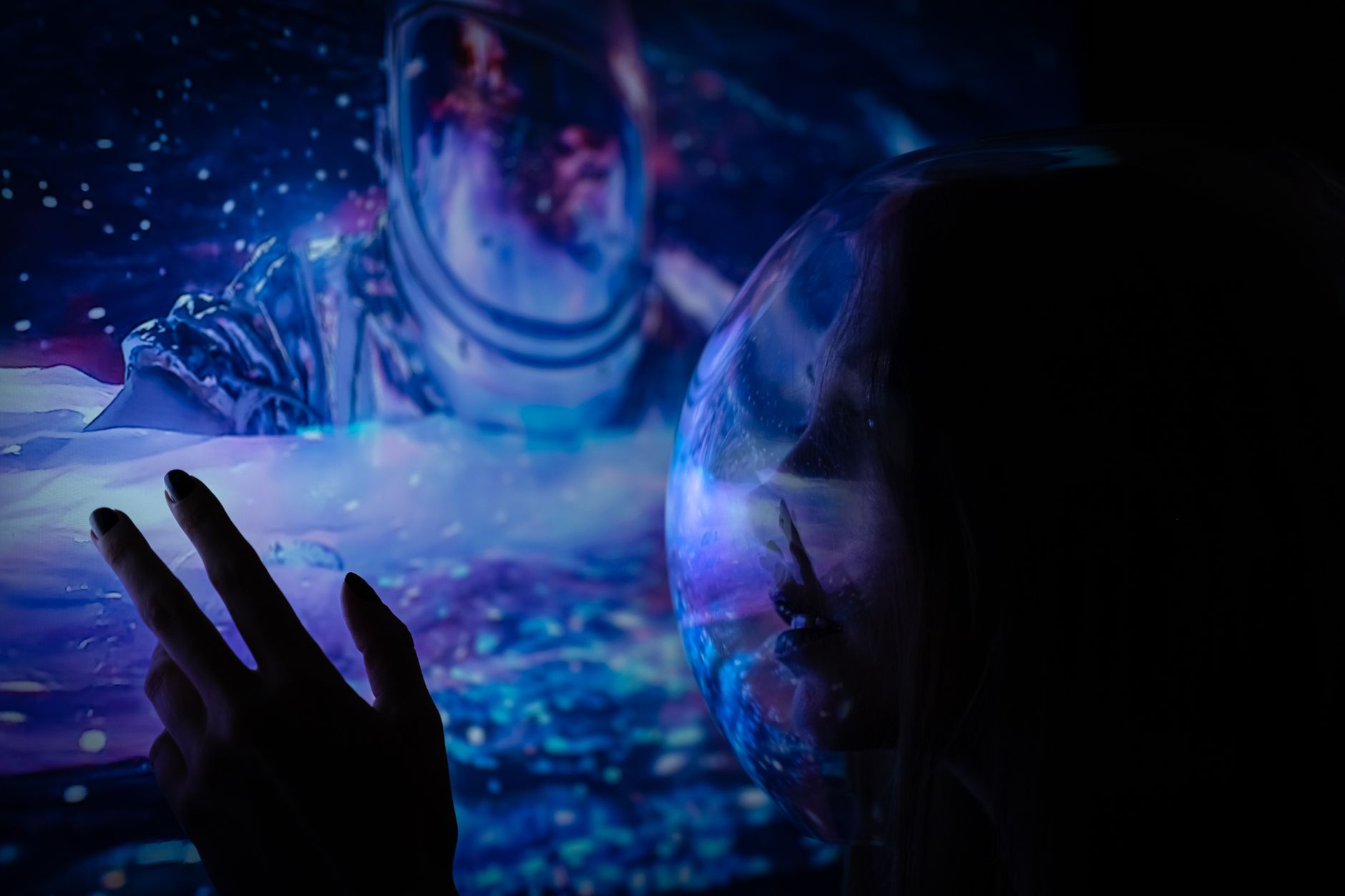
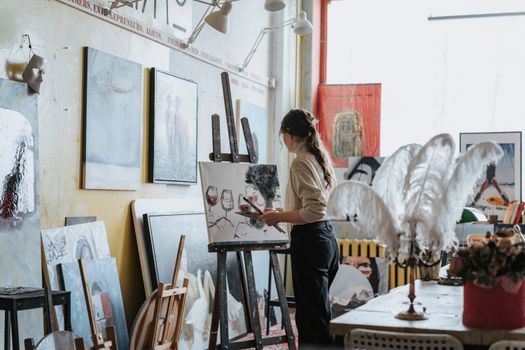 Photo: olia danilevich / Pexels
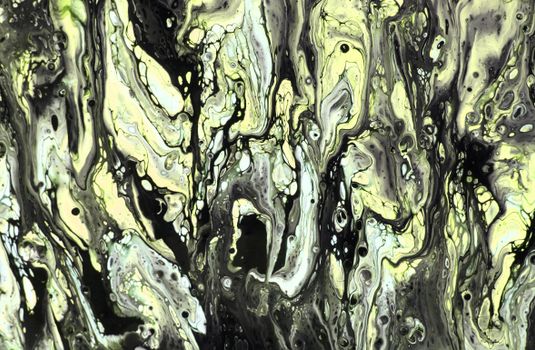 Photo: Landiva Weber / Pexels
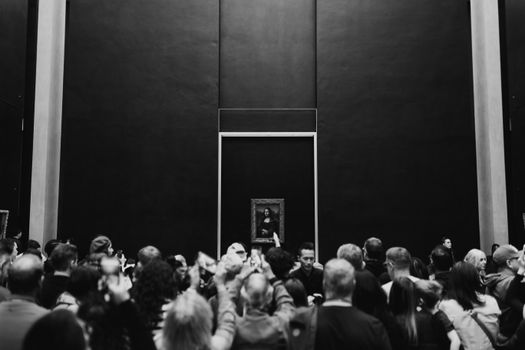 Photo: Mehmed Lukavackic / Pexels
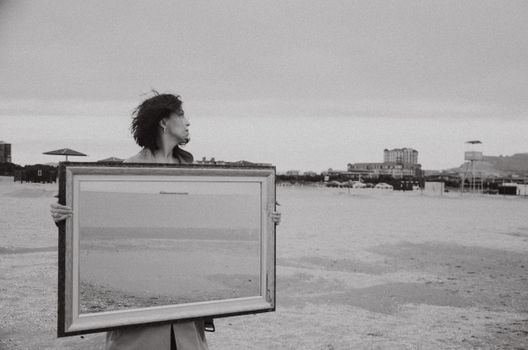 Photo: Nazila Azimzada / Pexels