✓ Surrealism emerged in the 1920s, primarily in Paris.
✓ It was founded by André Breton, who authored the Surrealist Manifesto.
✓ The movement sought to unleash the creative power of the unconscious mind.
✓ Freudian psychoanalysis was a significant influence on surrealist thought.
How It Works
1
Understand the Philosophical Roots
Surrealism wasn't just an art style; it was a philosophical movement aiming to revolutionize life itself. It drew heavily from Sigmund Freud's theories of the unconscious and Carl Jung's concepts of archetypes.
2
Explore Automatic Techniques
Artists employed techniques like automatic drawing and writing to bypass conscious control and access subconscious thoughts. This method aimed to reveal unfiltered imagery and ideas.
3
Decipher Dream Logic
Surrealist art often mimics the bizarre and illogical narratives of dreams, juxtaposing unrelated objects in unsettling ways. The goal was to create a new reality, a 'surreality,' that transcended the mundane.
4
Recognize Key Themes and Motifs
Look for recurring themes such as metamorphosis, sexuality, violence, the uncanny, and the exploration of identity. These elements are not random but serve to challenge perception and provoke thought.
The Birth of Surrealism: André Breton and the Unconscious Mind
Photo: Matheus Bertelli / Pexels
The meaning of surrealism art is inextricably linked to its revolutionary origins in the intellectual ferment of post-World War I Europe, specifically Paris in the 1920s. Emerging from the ashes of Dadaism, a movement characterized by its anti-establishment and nihilistic stance, Surrealism sought to move beyond mere negation. Its primary architect and theorist, André Breton, a former medical student and psychiatrist, was profoundly influenced by the psychoanalytic theories of Sigmund Freud. Freud's work on the unconscious mind, dreams, and repressed desires provided a fertile ground for Breton's vision. Breton believed that the rational mind, constrained by societal norms and logic, suppressed a vast, untapped reservoir of creative potential. He posited that true reality, or 'surreality,' lay in the synthesis of the conscious and unconscious worlds, dream and reality.
In 1924, Breton published the first 'Manifesto of Surrealism,' which formally launched the movement and outlined its core principles. He defined Surrealism as 'pure psychic automatism, by which one proposes to express, verbally, by means of the written word, or in any other manner, the actual functioning of thought. Dictated by thought, in the absence of any control exercised by reason, outside of any aesthetic or moral preoccupation.' This definition emphasized the liberation from conscious control and the embrace of spontaneous, unfiltered expression. The goal was not merely to create art but to provoke a profound transformation of human experience and perception. Early surrealists engaged in experimental techniques such as automatic writing and drawing, where they would allow their hands to move freely across the page without conscious direction, hoping to tap directly into their subconscious. This radical approach challenged traditional notions of artistic creation, authorship, and the very purpose of art itself. The movement quickly attracted a diverse group of artists, writers, and thinkers, all eager to explore the uncharted territories of the mind and challenge the conventions of their time. The initial phase of Surrealism was heavily focused on literature, but it soon expanded to visual arts, photography, and film, finding powerful expression across various mediums. The meaning of surrealism art, therefore, begins with this foundational quest to unlock the hidden depths of the human psyche and bring its wonders to the surface. Understanding artistic movements like Surrealism provides crucial context for appreciating their lasting impact.
Key Characteristics and Artistic Techniques Defining Surrealism
Photo: Tima Miroshnichenko / Pexels
The meaning of surrealism art is vividly expressed through its distinctive characteristics and the innovative techniques employed by its practitioners. At its core, Surrealism aimed to disorient and surprise, creating a sense of the uncanny by juxtaposing disparate elements in unexpected contexts. One of the most recognizable features is the dreamlike quality of many surrealist works. Artists like Salvador Dalí, René Magritte, and Max Ernst meticulously rendered impossible scenarios with photographic precision, making the illogical seem intensely real. Melting clocks, floating eyes, and landscapes where the sky meets the floor are not mere fantastical elements; they are visual metaphors for the subconscious mind's ability to defy conventional logic and create its own reality.
Beyond direct dream depiction, surrealists employed several techniques to access and express the unconscious. 'Automatic drawing' and 'automatic writing,' as mentioned, were crucial literary and artistic methods. Max Ernst famously developed 'frottage' (rubbing) and 'grattage' (scraping), where he would place paper over textured surfaces and rub with a pencil or scrape paint off a canvas to create spontaneous, suggestive patterns that he would then develop into images. Óscar Domínguez invented 'decalcomania,' pressing paint onto a surface and then peeling it away to create random textures. These techniques were designed to minimize conscious control and allow chance and the subconscious to guide the creative process.
Another significant characteristic is the irrational juxtaposition of objects, often in unsettling or humorous ways. Consider Meret Oppenheim's 'Object (Déjeuner en fourrure),' a fur-covered teacup, saucer, and spoon. This piece challenges our expectations of tactile sensation and utility, forcing us to confront the absurdity of the everyday. Similarly, the use of metamorphosis, where objects or figures transform into something else, is common, reflecting the fluidity of dreams and the unconscious. Symbolism, often deeply personal or drawing from Freudian archetypes, pervades surrealist works, inviting viewers to delve into their own interpretations rather than seeking a single, definitive meaning. The meaning of surrealism art is thus not singular but a tapestry woven from personal mythologies, collective unconscious imagery, and a deliberate disruption of rational thought. These visual strategies were not just stylistic choices; they were philosophical tools to challenge bourgeois values, societal norms, and the very fabric of perceived reality.
Iconic Artists and the Enduring Legacy of Surrealism
Photo: Lean Leta / Pexels
The meaning of surrealism art was shaped by a constellation of brilliant and diverse artists, each contributing their unique vision to the movement. Salvador Dalí, perhaps the most famous surrealist, is synonymous with his meticulously rendered, bizarre dreamscapes, featuring melting forms, desolate landscapes, and unsettling symbolism. His theatrical persona and prolific output brought Surrealism to a wider public, even as his commercial success led to his eventual expulsion from the core surrealist group by Breton. René Magritte, on the other hand, employed a more intellectual and philosophical approach. His paintings often feature ordinary objects placed in extraordinary contexts, challenging our perception of reality and the nature of representation itself, as exemplified by 'The Treachery of Images' (Ceci n'est pas une pipe). Joan Miró’s works, while abstract, are deeply rooted in surrealist automatism, characterized by vibrant colors, biomorphic forms, and a playful, childlike quality that taps into primal, subconscious states. Max Ernst, a pioneer of various surrealist techniques, explored themes of metamorphosis and the uncanny through his collages, frottages, and grattages.
Beyond these titans, artists like Frida Kahlo, though she resisted the label, is often associated with surrealism due to her intensely personal and symbolic self-portraits that delve into pain, identity, and the subconscious. Leonora Carrington, Remedios Varo, and Dorothea Tanning brought powerful female perspectives, exploring themes of magic, mythology, and feminine identity within surrealist frameworks. The movement also encompassed photography (Man Ray), sculpture (Alberto Giacometti), and film (Luis Buñuel and Dalí's 'Un Chien Andalou'), demonstrating its pervasive influence across various artistic disciplines. The meaning of surrealism art extends far beyond the explicit works created by the original group. Its legacy is profound and far-reaching. Surrealism opened doors for subsequent art movements, influencing Abstract Expressionism's embrace of automatism and the unconscious, Pop Art's recontextualization of everyday objects, and Conceptual Art's emphasis on ideas over aesthetics. Its impact can be seen in literature, cinema, advertising, fashion, and even psychotherapy, where the exploration of dreams and the unconscious remains vital. Surrealism permanently altered our understanding of creativity, challenging us to look beyond the rational and embrace the limitless possibilities of the imagination. It continues to inspire artists and thinkers to question reality and explore the hidden dimensions of the human experience. Exploring art history reveals Surrealism's enduring power.
Interpreting Surrealism: Tips for Understanding the Unconventional
Photo: Greta Hoffman / Pexels
Understanding the meaning of surrealism art can be a captivating yet challenging endeavor, as it deliberately defies straightforward interpretation. Unlike art forms that aim for clear narratives or realistic depictions, surrealism often operates on the logic of dreams, where symbols are fluid and meaning is deeply personal. Here are some tips to help you navigate and appreciate the unconventional world of surrealist art:
* **Embrace Ambiguity:** The primary mistake is to seek a single, definitive explanation for every element. Surrealist art thrives on ambiguity and multiple interpretations. Instead of asking 'What does this mean?', try asking 'What does this evoke in me?' or 'What connections can I draw?' Allow your own subconscious to engage with the artwork.
* **Consider the Artist's Context:** While surrealism emphasizes the unconscious, artists still had personal histories, cultural backgrounds, and specific interests. Researching an artist's life, influences (like Freudian theory for Dalí, or mythology for Carrington), and the historical period can offer valuable insights into recurring motifs and themes.
* **Look for Juxtaposition and Transformation:** Pay close attention to how objects, figures, and environments are placed together, especially if they seem illogical or out of place. The collision of unrelated elements is central to surrealist shock and often carries symbolic weight. Also, notice any transformations or metamorphoses happening within the image; these often represent psychological shifts or hidden desires.
* **Explore Common Surrealist Motifs:** While not a rigid dictionary, certain motifs frequently appear: eyes (representing vision, insight, or surveillance), hands (action, creation, or manipulation), animals (often symbolic of instincts or repressed desires), clocks/time (fluidity of time, memory), and desolate landscapes (inner psychological states). Recognizing these can provide a starting point for interpretation.
* **Engage with Your Own Dreams:** Since surrealism is heavily influenced by dream logic, reflecting on your own dreams can help you understand the non-linear, symbolic nature of surrealist imagery. How do your dreams combine elements? What feelings do they evoke? This personal connection can deepen your appreciation.
* **Read the Manifestos and Writings:** André Breton's manifestos and other surrealist writings offer direct insights into the philosophical underpinnings of the movement. While theoretical, they provide a framework for understanding the artists' intentions to revolutionize thought and society, not just art.
By approaching surrealist art with an open mind and a willingness to explore the depths of the imagination, you can unlock its profound and often unsettling beauty. The meaning of surrealism art is less about what it explicitly shows and more about what it implicitly reveals about the human condition and the boundless realms of the subconscious.
Comparison
Aspect
Surrealism
Dadaism
Cubism
Realism
Goal
Liberate unconscious, create surreality
Anti-art, challenge bourgeois values
Deconstruct reality, multiple perspectives
Depict reality accurately
Primary Influence
Freudian psychoanalysis
WWI disillusionment, nihilism
African art, Cézanne
Social commentary, everyday life
Key Technique
Automatism, dream logic, juxtaposition
Chance, readymades, collage
Geometric forms, fragmented views
Meticulous detail, naturalistic forms
Emotional Tone
Dreamlike, uncanny, provocative
Absurdist, satirical, anarchic
Intellectual, analytical
Objective, often somber
Focus
Inner world, subconscious
Societal critique, anti-establishment
Form, structure, perspective
External world, social issues
What Readers Say
★★★★★
"This article completely shifted my understanding of the meaning of surrealism art. I used to think it was just weird paintings, but now I see the profound philosophical underpinnings and the deliberate exploration of the subconscious. It's incredibly insightful."
Eleanor Vance · Seattle, WA
★★★★★
"As an art student, this deep dive into the meaning of surrealism art is invaluable. The explanations of automatic techniques and dream logic were particularly helpful in demystifying the creative process of surrealist masters. Highly recommended for anyone studying art history."
Marcus Chen · Brooklyn, NY
★★★★★
"I always admired Dalí, but never fully grasped the 'why' behind surrealism. This article broke down the meaning of surrealism art into understandable concepts, linking it to Freud and societal critique. My next museum visit will be much more enriching."
Sophia Rodriguez · Miami, FL
★★★★★
"While comprehensive, some of the philosophical concepts around the meaning of surrealism art were quite dense. However, the section on interpreting the art with practical tips was excellent and made the overall experience very rewarding. I've learned a lot."
David Miller · Austin, TX
★★★★★
"I'm a writer, and the insights into automatic writing and the liberation of the unconscious in the context of the meaning of surrealism art have inspired my own creative process. It's not just about visual art; it's a way of thinking that transcends disciplines."
Lena Petrova · Chicago, IL
Frequently Asked Questions
What is the core meaning of surrealism art?
The core meaning of surrealism art lies in its quest to liberate the human imagination by tapping into the unconscious mind, particularly through dreams and automatism. It aims to create a 'surreality' – a higher reality where dream and reality are reconciled, thereby challenging rational thought and societal conventions.
Is surrealism still relevant today?
Absolutely. Surrealism's exploration of the unconscious, its questioning of reality, and its embrace of the absurd resonate strongly in contemporary art, literature, film, and even digital media. Its influence is evident in psychological thrillers, fantasy genres, and any creative work that delves into dreamscapes or challenges conventional perception, making the meaning of surrealism art perpetually relevant.
How can I start to understand a surrealist painting?
To understand a surrealist painting, start by letting go of the need for a literal interpretation. Instead, observe the illogical juxtapositions, the dreamlike atmosphere, and the symbolic elements. Consider the feelings and associations these elements evoke in you. Researching the artist's background and common surrealist motifs can also provide helpful context.
Was surrealism just about art, or was it a broader movement?
Surrealism was far more than just an art movement; it was a revolutionary philosophical and political movement aiming to transform life itself. It encompassed literature, poetry, film, photography, and sought to challenge societal norms, politics, and the very concept of reality, making the meaning of surrealism art just one facet of its broad impact.
How does surrealism differ from abstract art?
While both challenge traditional representation, the meaning of surrealism art typically retains recognizable objects, though often distorted or juxtaposed illogically, aiming to depict an inner, psychological reality. Abstract art, conversely, often moves away from recognizable subject matter entirely, focusing instead on form, color, and line to evoke emotions or ideas directly.
Who should explore the meaning of surrealism art?
Anyone with an interest in art history, psychology, philosophy, or creative expression will find the meaning of surrealism art deeply rewarding. It appeals to those who enjoy challenging their perceptions, exploring the depths of the human mind, and appreciating art that defies easy categorization and sparks profound thought.
Is surrealism considered a 'dark' or 'negative' art form?
Not necessarily. While some surrealist works can be unsettling or explore themes of anxiety and the subconscious dark side, many also embrace humor, wonder, and liberation. The movement aimed to reveal the full spectrum of human experience, including the irrational and the fantastical, not exclusively the negative. The meaning of surrealism art encompasses a wide emotional range.
What is the future trend for understanding surrealism?
The future trend for understanding the meaning of surrealism art involves increasingly interdisciplinary approaches, linking it more explicitly to modern psychology, neuroscience, and digital art. As AI and virtual reality continue to evolve, the dreamlike and reality-bending aspects of surrealism will likely find new expressions and interpretations, further cementing its timeless relevance.
Delve deeper into the captivating world of the unconscious and unlock the profound meaning of surrealism art. Let this groundbreaking movement inspire your own perception of reality and creativity. Explore, question, and discover the 'surreality' that lies beneath the surface.

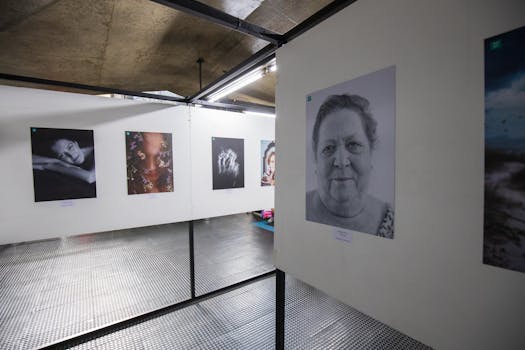 Photo: Matheus Bertelli / Pexels
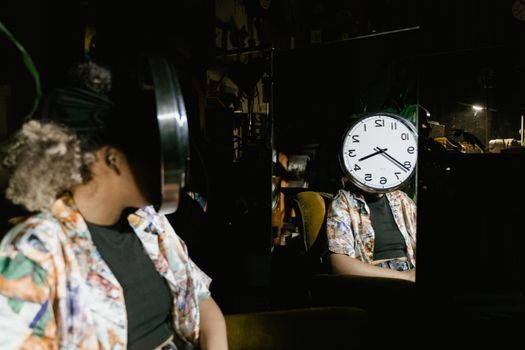 Photo: Tima Miroshnichenko / Pexels
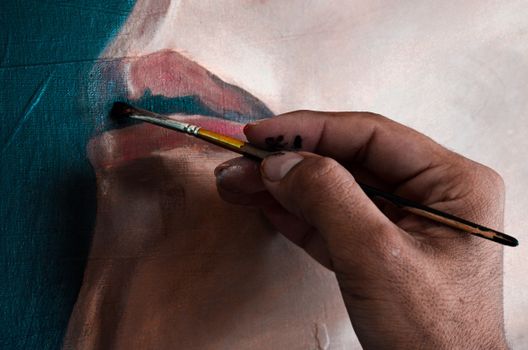 Photo: Lean Leta / Pexels
 Photo: Greta Hoffman / Pexels