Unlocking the Meaning of Abstract Art
meaning of abstract art

Unlocking the Meaning of Abstract Art

Dive deep into the world of non-representational art and discover its emotional and intellectual impact.

Start Your Journey

Key Takeaways

  • ✓ Abstract art emphasizes color, form, and texture over literal representation.
  • ✓ It emerged in the early 20th century as a radical departure from traditional art.
  • ✓ Interpretation is highly personal and often evokes emotions and ideas.
  • ✓ Key pioneers include Kandinsky, Mondrian, and Malevich.
  • ✓ It encourages viewers to engage with art on an emotional and intellectual level.

How It Works

1
Observe Without Preconception

Approach abstract art with an open mind, setting aside expectations of seeing recognizable objects. Allow your initial reactions to form organically.

2
Engage with Elements

Focus on the fundamental elements: colors, shapes, lines, and textures. Consider how they interact and what feelings or ideas they might convey.

3
Connect to Emotion

Reflect on the emotions or sensations the artwork evokes within you. Abstract art often communicates directly with our subconscious and feelings.

4
Research Context (Optional)

If you're curious, research the artist, their intentions, or the art movement. This can add another layer of understanding, but isn't always necessary for appreciation.

The Essence of Non-Representational Art: What is Abstract Art?
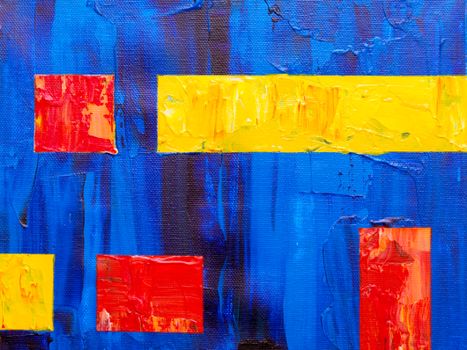
Colorful abstract art on canvas featuring red and yellow geometric shapes against a blue background. Photo: Steve A Johnson / Pexels
Abstract art, at its core, is a profound departure from the literal. Unlike representational art, which aims to depict recognizable objects, figures, or scenes from the real world, abstract art deliberately moves away from objective reality. Instead, it employs shapes, colors, forms, and gestural marks to achieve its effect. The 'meaning' here isn't found in identifying a tree or a person, but in the interplay of these elements themselves, and the emotions, ideas, or spiritual concepts they might evoke. This artistic approach invites viewers to engage with art on a fundamentally different level – one that is often more intuitive, emotional, and personal. It challenges the viewer to look beyond the surface, to feel rather than just see, and to interpret based on their own experiences and perceptions. The beauty of abstract art lies in its ability to communicate directly with our senses and our subconscious, bypassing the need for a narrative or a concrete subject. It can be a vibrant explosion of color, a serene arrangement of geometric forms, or a powerful, expressive gesture. Each piece is a unique visual language, speaking volumes without uttering a single recognizable word. Understanding abstract art begins with accepting this premise: that art does not need to mimic reality to be meaningful or impactful. In fact, by stripping away the familiar, abstract artists often believe they can reach a deeper, more universal truth or emotion. They are not trying to hide meaning; they are trying to reveal a different kind of meaning, one that transcends the everyday. This approach allows for immense freedom both for the artist in creation and for the viewer in interpretation, making each encounter with an abstract piece a unique dialogue. This fundamental shift in perspective is what makes abstract art so revolutionary and enduringly fascinating, pushing the boundaries of what art can be and how it can affect us. It's a testament to the power of pure visual expression, offering a rich tapestry of experiences for those willing to immerse themselves in its depths. Explore the origins of modern art to better grasp this evolution.

A Journey Through Time: The Historical Context of Abstract Art
Colorful abstract art with vivid hues and dynamic texture, showcasing modern expressionism. Photo: Steve A Johnson / Pexels
The emergence of abstract art in the early 20th century wasn't a sudden anomaly but rather a culmination of societal, technological, and philosophical shifts. The advent of photography had liberated painting from its duty to merely record reality, opening doors for artists to explore new dimensions. Scientific discoveries, such as Einstein's theory of relativity and Freud's psychoanalysis, challenged traditional perceptions of space, time, and the human psyche, inspiring artists to look beyond the tangible. This period was ripe for artistic revolution, and abstract art became one of its most potent expressions. Pioneers like Wassily Kandinsky, often credited with creating one of the first purely abstract works, believed that art could express inner spiritual truths, much like music. He saw colors and forms as having intrinsic emotional and spiritual properties, capable of evoking profound feelings without needing to depict external reality. His early works, often described as 'improvisations' and 'compositions,' burst with vibrant colors and dynamic lines, aiming to reflect an inner necessity. Simultaneously, movements like Cubism, pioneered by Picasso and Braque, began to deconstruct objects into geometric forms, paving the way for further abstraction. While Cubism still held onto recognizable subjects, its emphasis on multiple perspectives and fragmented forms pushed the boundaries of representation. Piet Mondrian, a Dutch artist, took abstraction in a different direction with De Stijl. He sought universal harmony and order through pure geometric forms, primary colors, and straight lines, believing this minimalist approach could reveal fundamental truths about existence. Kasimir Malevich, with his Suprematism, pushed abstraction to its ultimate limit with works like 'Black Square,' aiming to convey pure feeling and non-objectivity. These artists, among many others, were not simply making 'things that don't look like anything.' They were driven by deeply held philosophical beliefs and a desire to create a new visual language capable of expressing the complexities of the modern world and the human spirit. Their innovations laid the groundwork for countless abstract movements that followed, from Abstract Expressionism to Minimalism, each adding new layers to the rich tapestry of abstract art history. Understanding this historical context is crucial for appreciating the profound intellectual and spiritual ambitions that fueled its creation, demonstrating that the meaning of abstract art is deeply rooted in its revolutionary origins.

Interpreting the Unseen: How to Find Personal Meaning in Abstract Art
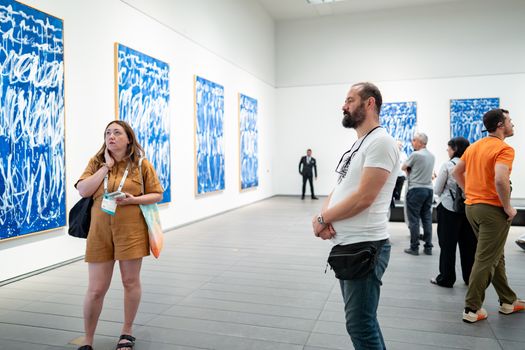
Visitors in an art gallery engaging with blue abstract artworks. Captured indoors with contemporary art, diverse visitors enhancing the scene. Photo: This And No Internet 25 / Pexels
One of the most common questions people have about abstract art is, 'What does it mean?' The answer is both simple and complex: it means whatever you perceive it to mean. Unlike a portrait or a landscape, there isn't a single, universally correct interpretation of an abstract piece. This can be liberating for some and frustrating for others. The key to finding personal meaning lies in active engagement and introspection. Start by allowing yourself to simply experience the artwork without immediately trying to label or categorize it. What is your initial gut reaction? Does a particular color scheme evoke a sense of calm, excitement, or unease? Do the lines feel energetic or serene? The artist's intention, while sometimes discoverable through research, is not the sole determinant of meaning. Your unique life experiences, cultural background, and emotional state all contribute to how you perceive and interpret the artwork. Think of abstract art as a visual metaphor, a Rorschach test for the soul. The artist provides the visual stimulus, and your mind completes the meaning-making process. For example, a painting with bold, aggressive brushstrokes and dark colors might evoke feelings of anger or turmoil for one person, while another might see it as a powerful expression of raw energy and passion. Neither interpretation is wrong. It's about what resonates with you. Pay attention to the composition – how the elements are arranged on the canvas. Does it feel balanced or chaotic? Does your eye follow a particular path? Consider the texture; does it look smooth, rough, or layered? These physical attributes contribute significantly to the overall emotional and intellectual impact. Engaging with abstract art is a practice in mindfulness and self-discovery. It encourages you to trust your own intuition and emotions, rather than relying on external validation. It’s an invitation to explore your inner landscape through the lens of another's creation. By embracing this subjective journey, you unlock a deeper, more personal connection to the artwork, revealing the profound and often hidden meaning of abstract art for you. Learn more about art appreciation techniques to enhance your experience.

Beyond the Canvas: The Enduring Impact and Benefits of Abstract Art
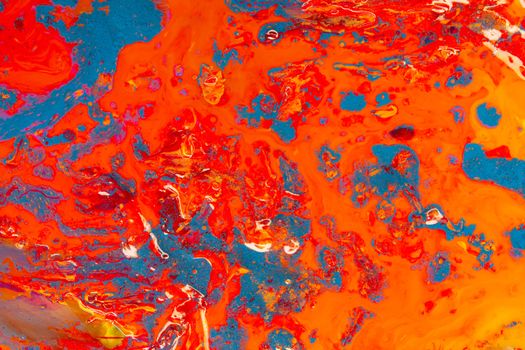
Colorful abstract artwork featuring striking blue and orange swirls and textures. Photo: Merlin Lightpainting / Pexels
The influence of abstract art extends far beyond the gallery walls, permeating various aspects of our culture and offering significant benefits to those who engage with it. One of its most profound impacts is its ability to foster critical thinking and creativity. By presenting images that defy literal interpretation, abstract art compels viewers to think more deeply, to question, and to form their own conclusions. This mental exercise strengthens cognitive flexibility and encourages innovative thought processes, skills invaluable in many areas of life. Furthermore, abstract art often serves as a powerful medium for emotional expression and catharsis. Both for the artist creating it and the viewer experiencing it, abstract works can tap into a primal, non-verbal language of feelings. It can articulate emotions that are difficult to put into words, offering a sense of understanding or release. This emotional resonance is a key component of its enduring appeal. The benefits of engaging with abstract art include:
  • Enhanced Emotional Intelligence: By interpreting abstract forms, viewers learn to recognize and articulate subtle emotional responses.
  • Increased Creativity: Exposure to non-representational art stimulates imaginative thinking and problem-solving skills.
  • Improved Observation Skills: It trains the eye to notice details like color shifts, line dynamics, and textural nuances.
  • Stress Reduction: For many, the open-ended nature of abstract art can be meditative, providing a mental escape and reducing anxiety.
  • Personal Growth: It encourages self-reflection and challenges preconceived notions about art and reality.
Abstract art has also profoundly influenced design, fashion, architecture, and even scientific visualization. Its principles of composition, color theory, and form have been adopted and adapted across various disciplines, proving its versatile and universal appeal. By stripping away narrative, abstract art emphasizes the fundamental elements of visual communication, making it a foundational language for modern aesthetics. Its continuous evolution and adaptation ensure its relevance, reminding us that the meaning of abstract art is not static but a dynamic, ever-unfolding dialogue between art, artist, and audience.

Comparison

AspectAbstract ArtRepresentational ArtSurrealist Art
Primary FocusForm, Color, EmotionLiteral DepictionDreams, Subconscious
InterpretationSubjective, PersonalObjective, RecognizableSymbolic, Psychological
Viewer EngagementIntuitive, EmotionalAnalytical, ObservationalIntrospective, Puzzling
GoalExpress inner truth/feelingDepict realityExplore inner reality

What Readers Say

"This article completely changed my perspective on the meaning of abstract art. I used to find it confusing, but now I feel equipped to truly engage with it on a deeper level. It's incredibly insightful and easy to understand."

Sarah J. · Brooklyn, NY

"As an aspiring artist, understanding the historical context and various interpretations of abstract art is crucial. This piece offers a comprehensive and inspiring guide, helping me appreciate the freedom and depth of the genre."

Mark T. · Austin, TX

"I always felt intimidated by abstract art, but this explanation of the meaning of abstract art made it so accessible. I went to a gallery last weekend and actually felt connected to a piece for the first time; a truly transformative experience!"

Elena R. · Chicago, IL

"While I still struggle with some of the more extreme forms of abstract art, this article provided excellent frameworks for interpretation. It helped me appreciate the intent behind the work, even if the aesthetic isn't always my preference. Very well-written."

David L. · Seattle, WA

"I'm an art educator, and this article perfectly articulates the nuances of the meaning of abstract art. I'll definitely be recommending it to my students as a starting point for their own interpretive journeys."

Jessica M. · Miami, FL

Frequently Asked Questions

What is the primary meaning of abstract art?

The primary meaning of abstract art is not found in literal representation, but in the interplay of its visual elements – colors, shapes, forms, and lines – and the emotions, ideas, or spiritual concepts they evoke. It's about expressing inner realities rather than outer ones, allowing for highly personal interpretation.

Is there a 'right' way to understand abstract art?

No, there isn't a single 'right' way to understand abstract art. Its beauty lies in its subjectivity. While artists often have intentions, the viewer's personal experiences and emotional responses play a significant role in creating meaning. The 'right' way is your way of connecting with it.

How can I start appreciating abstract art if I don't 'get it'?

Start by setting aside expectations of seeing recognizable objects. Focus on your immediate emotional and sensory reactions to the colors, shapes, and textures. Let yourself feel what the art evokes, rather than trying to intellectualize it first. Over time, your appreciation will deepen.

Does abstract art have any real value or purpose?

Absolutely. Abstract art holds immense value. It challenges perceptions, fosters creativity and critical thinking, provides emotional expression and catharsis, and has profoundly influenced various design fields. Its purpose is to expand our understanding of art, emotion, and reality beyond literal depiction.

How does abstract art differ from non-objective art?

While often used interchangeably, 'non-objective art' is a subcategory of abstract art. Non-objective art contains no recognizable subject matter whatsoever, being purely about form, color, and line. Abstract art, more broadly, can sometimes derive from a real-world object that has been simplified or distorted beyond recognition.

Who should engage with abstract art?

Anyone can and should engage with abstract art! It's particularly beneficial for individuals seeking to expand their creativity, deepen their emotional intelligence, or simply experience art in a less literal, more intuitive way. It's an open invitation for personal discovery.

Is abstract art just random splatters?

While some abstract art may appear spontaneous, it is rarely 'random splatters.' Most abstract artists employ deliberate choices regarding color, composition, and technique, often with deep philosophical or emotional intentions. Even seemingly chaotic works are usually the result of careful artistic decisions.

What is the future trend for abstract art?

The future of abstract art continues to evolve, often incorporating new technologies like digital media, AI, and immersive experiences. It will likely continue to explore themes of identity, technology's impact on perception, and environmental concerns, always pushing the boundaries of visual language and interpretation.

Ready to deepen your understanding and appreciation? Explore the meaning of abstract art further by visiting local galleries, engaging with online communities, and allowing yourself the freedom to interpret and connect with this extraordinary art form on your own terms. Your journey into abstraction awaits!

Topics: meaning of abstract artabstract art interpretationhistory of abstract artunderstanding abstract artabstract art benefits
Leo List

DK Escorts LU Escorts AT Escorts SE Escorts FI Escorts CH Escorts DE Escorts HR Escorts IE Escorts GR Escorts CZ Escorts NO Escorts BE Escorts FR Escorts SI Escorts IL Escorts NL Escorts PL Escorts HU Escorts ES Escorts IT Escorts PT Escorts SK Escorts RO Escorts ZA Escorts UY Escorts US Escorts UK Escorts NZ Escorts AU Escorts
Brampton weed
Adultwork EstrelaBet Vai de Bet R7 Bet Betão Galera Bet Rainbet Bet9ja Shop SportyBet BetKing Sisal Loto Foot Hollywoodbets YesPlay Odibets RushBet Jugabet BetWarrior BetCity MSport betPawa Fortebet