
Mastering How to Frame a Canvas Painting Perfectly
how to frame a canvas painting

Mastering How to Frame a Canvas Painting Perfectly

Unlock the secrets to beautifully framing your canvas art, adding elegance and protection to every piece you create or collect.

Start Framing Now

Key Takeaways

  • ✓ Choosing the right frame type (e.g., float, traditional) is crucial for a canvas painting's aesthetic.
  • ✓ Accurate measurements are paramount for a snug fit and professional appearance.
  • ✓ Specialized hardware is often required for hanging framed canvas art securely.
  • ✓ Framing protects the canvas from environmental damage and enhances its longevity.

How It Works

1
Select Your Frame Style

Determine if a float frame, traditional frame, or a simple stretcher bar is best suited for your canvas and artistic vision. Consider the painting's style and the room's decor.

2
Measure Accurately

Carefully measure the height, width, and depth of your canvas, paying close attention to any variations. These measurements will dictate the frame size you need.

3
Assemble the Frame (if applicable)

If using a DIY frame kit or raw materials, follow manufacturer instructions to assemble the frame securely. Ensure all corners are square and joints are strong.

4
Mount and Secure the Canvas

Position the canvas within the frame, ensuring even spacing or flush edges as per your chosen style. Use appropriate hardware, such as offset clips or screws, to secure the canvas without damaging it.

Understanding Canvas Painting Framing Styles
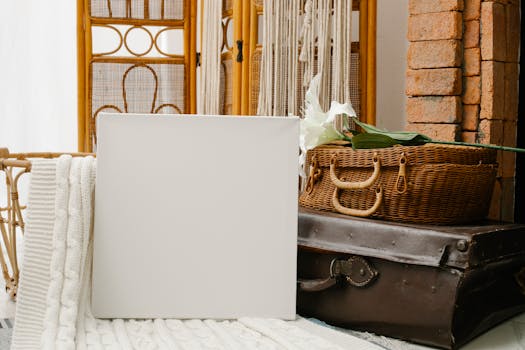
Empty white canvas placed against vintage suitcases and old folding screen in light studio Photo: Angela Roma / Pexels
Framing a canvas painting is not merely about encasing it; it's about enhancing its presence, protecting its integrity, and complementing its artistic message. The choice of frame can dramatically alter how a viewer perceives the artwork, influencing its perceived value and overall aesthetic impact. Before diving into the 'how-to,' it’s essential to understand the primary styles available, as each offers a distinct visual language and serves different types of canvas art. The two most popular styles for canvas paintings are the traditional frame and the float frame, each with its unique characteristics and advantages. Traditional frames for canvas paintings typically involve a rabbet (a recessed groove) that holds the edges of the canvas. These frames often cover a small portion of the painting's side edges, creating a classic, finished look. They come in a vast array of profiles, materials, and finishes, from ornate gilded wood to sleek, minimalist metal. The choice of a traditional frame often depends on the painting's style: an elaborate gold frame might suit a classical landscape, while a simple black or white frame could perfectly complement a modern abstract piece. When selecting a traditional frame, consider the painting's colors, the mood it evokes, and the existing decor of the space where it will be displayed. The goal is to find a frame that supports, rather than distracts from, the artwork. Many artists also use traditional frames for gallery-wrapped canvases, though special considerations might be needed to ensure the canvas sits properly within the rabbet without showing the staples or unpainted edges. For more insights on various art techniques, consider exploring resources on different painting mediums. Float frames, also known as 'floater frames,' offer a more contemporary and popular solution, especially for gallery-wrapped canvases. Unlike traditional frames, float frames are designed to create a visual 'gap' or 'float' between the edge of the canvas and the inner edge of the frame. This creates the illusion that the canvas is floating within the frame, hence the name. This style is particularly effective for paintings where the artist has continued the image around the sides of the canvas (gallery wrap) or for pieces that benefit from a clean, unobtrusive border. Float frames do not cover any part of the canvas's front surface, allowing the entire artwork to be visible. They typically come in simple, clean profiles, often in black, white, natural wood, or metallic finishes, designed to provide a subtle boundary without competing with the art. The depth of a float frame is crucial; it must be deep enough to accommodate the thickness of your canvas, ensuring the canvas sits slightly recessed from the front edge of the frame, protecting the painting surface. This contemporary approach is highly favored in modern galleries and homes, offering a sophisticated and minimalist presentation that emphasizes the artwork itself. The decision between a traditional and a float frame largely depends on the artwork's style, the artist's intent, and the desired aesthetic of the display space.

Precise Measurement and Material Selection for Your Canvas Frame
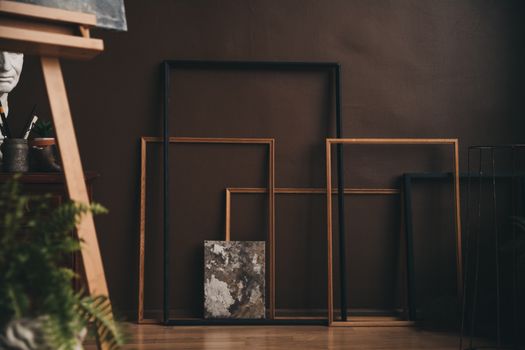
Aesthetic arrangement of wooden picture frames in a dimly-lit art studio with an easel. Photo: Lisett Kruusimäe / Pexels
Accurate measurement is the cornerstone of successful canvas framing. Without precise dimensions, you risk ending up with a frame that’s either too tight, potentially damaging the canvas, or too loose, leading to an unprofessional and ill-fitting appearance. Begin by measuring the height, width, and depth of your canvas. It's crucial to measure at several points along each dimension, as canvases, especially hand-stretched ones, can sometimes have slight variations. Always use the largest measurement if discrepancies occur, allowing for a tiny margin of error that can be rectified later. For a traditional frame, you'll want the inner dimensions of the frame to match the outer dimensions of your canvas as closely as possible, accounting for the rabbet depth. For float frames, you'll need to consider the desired 'float' gap, typically 1/4 to 1/2 inch on all sides, in addition to the canvas dimensions. Beyond the basic dimensions, the depth of your canvas stretcher bars is a critical measurement, especially for float frames. The frame's depth must be greater than or equal to the canvas depth to ensure the canvas sits properly within the frame without protruding. If the canvas is thinner than the frame's rabbet in a traditional frame, you might need spacers or backing material to push it forward. Conversely, if it's too thick for a float frame, the canvas might stick out unattractively. Once measurements are confirmed, selecting the right framing materials is the next vital step. Frame materials range from various types of wood (pine, oak, maple, walnut) to metal (aluminum) and synthetic options. Wood frames are popular for their warmth, versatility, and ability to be stained, painted, or carved. They offer a classic aesthetic and can be customized to match any decor. Metal frames, often made from aluminum, provide a sleek, modern, and minimalist look, known for their durability and clean lines. Synthetic frames, made from materials like polystyrene, can mimic the look of wood or metal at a lower cost, and are often lighter and more resistant to humidity fluctuations. Consider the weight of your canvas and frame when choosing materials. A large, heavy canvas might require a robust frame material and sturdy hanging hardware. The finish of the frame material is equally important. Do you want a natural wood grain, a painted finish, a distressed look, or a metallic sheen? The finish should complement the artwork and the environment where it will be displayed. Remember, the frame should enhance the artwork, not compete with it. A common mistake is choosing a frame that is too ornate or distracting for a simple piece, or too plain for a vibrant, complex painting. The goal is harmony and balance, ensuring the frame elevates the canvas painting without overshadowing it. Taking the time to measure precisely and select appropriate materials will significantly contribute to the professional and lasting presentation of your artwork.

Step-by-Step Guide to Assembling and Mounting Your Canvas

Two artists in aprons discuss art techniques with a blank canvas in a creative studio. Photo: Thirdman / Pexels
Once you have your chosen frame and confirmed your measurements, the assembly and mounting process begins. This stage requires patience and attention to detail to ensure a professional and secure finish. If you've purchased a pre-made frame, assembly might be minimal, perhaps just inserting corner keys if it's a 'knock-down' kit. However, if you're working with raw frame stock, you'll need to cut the pieces to size, miter the corners (usually at 45 degrees), and join them using wood glue and V-nails or screws. Always use clamps to hold the corners tightly while the glue dries to ensure strong, square joints. A corner clamp or strap clamp can be invaluable here. For more advanced techniques, consider learning about woodworking for artists. After the frame is assembled and dry, it's time to prepare for mounting the canvas. For traditional frames, the canvas is typically secured from the back. Place the canvas face down on a clean, soft surface (like a blanket or foam board) to protect the painting surface. Carefully position the frame over the canvas, aligning the edges. Ensure the canvas is centered and sitting flush within the frame's rabbet. You'll then use offset clips (also known as Z-clips or mirror clips) to secure the canvas to the frame. These small metal clips have a screw hole at one end and an offset lip at the other. The screw end attaches to the frame, and the lip extends over the canvas stretcher bar, holding it in place. Distribute these clips evenly around all four sides of the frame, typically every 6-8 inches, to provide consistent pressure and prevent the canvas from shifting. For larger canvases, you might need more clips or stronger hardware. For float frames, the mounting process is slightly different. The canvas is usually secured to the back of the float frame using screws. Again, place the canvas face down on a protected surface. Position the float frame over the canvas, ensuring the desired 'float' gap is consistent on all four sides. This gap is critical for the aesthetic of a float frame, so take your time to get it right. You can use spacers or shims to maintain an even gap while you work. Once positioned, you'll screw directly through the back of the float frame's inner edge into the canvas stretcher bars. Use screws that are long enough to penetrate securely into the stretcher bar without going through to the front of the canvas. Pilot holes are highly recommended to prevent wood splitting, especially if using hardwood stretcher bars or a dense frame material. Start with one screw on each side, then check the alignment before adding more screws. Typically, 2-3 screws per side, depending on the canvas size, are sufficient. The goal is a secure, stable fit that highlights the artwork and protects it for years to come. Finally, attach appropriate hanging hardware to the back of the frame, such as D-rings and picture wire, or a French cleat system for heavier pieces, ensuring it's robust enough for the combined weight of the canvas and frame.

Advanced Tips and Common Mistakes in Canvas Framing

Various framed artworks displayed on grass, creating an outdoor art gallery vibe. Photo: Mathias Reding / Pexels
Achieving a professional finish when framing a canvas painting goes beyond the basic steps; it involves attention to detail and an understanding of common pitfalls. Here are some advanced tips to elevate your framing game and mistakes to avoid: **Advanced Tips:** * **Consider the Wall Color:** The color of the wall where the painting will hang can impact frame choice. A frame that contrasts too starkly with the wall might visually shrink the artwork, while a complementary color can enhance it. Test swatches or samples if possible. * **Use Archival Materials:** If your artwork is valuable or intended for long-term display, ensure all materials that come into contact with the canvas are acid-free and archival quality. This includes any backing boards or spacers, though direct contact is minimal with canvas framing. * **Add a Backing Board:** Even for canvas, adding a rigid backing board (e.g., acid-free foam core or MDF) to the back of the frame, behind the canvas, can add an extra layer of protection against dust, humidity, and accidental punctures from the rear. This is especially useful for traditional frames. * **Finger Joints vs. Mitered Corners:** While mitered corners are standard, some professional frames use finger joints for superior strength and longevity. If you're building your own frames, exploring these joinery techniques can result in a more durable product. * **Dust Sealing:** For maximum protection, consider sealing the back of the frame with a dust cover paper (acid-free kraft paper) after the canvas is mounted and hanging hardware is attached. This creates a barrier against dust, insects, and environmental fluctuations. **Common Mistakes to Avoid:** * **Inaccurate Measurements:** This is the most frequent and impactful error. A frame that's even slightly off can ruin the aesthetic and make mounting difficult or impossible. Always double-check your measurements. * **Ignoring Canvas Depth:** Failing to account for the canvas's thickness, especially with float frames, can lead to the canvas protruding awkwardly or not sitting correctly within the frame's rabbet. * **Over-tightening Screws/Clips:** Applying too much pressure when securing the canvas can warp the stretcher bars, damage the canvas, or strip screw holes. Be firm but gentle. * **Poorly Chosen Frame Style:** Selecting a frame that clashes with the artwork's style or the room's decor can detract from the painting's beauty. A delicate watercolor, for instance, might be overwhelmed by a heavy, ornate frame. * **Using Non-Archival Materials:** For art preservation, using materials that can degrade over time and potentially leach acids onto the canvas is a significant mistake, even if the contact is indirect. * **Inadequate Hanging Hardware:** Using weak or inappropriate hanging hardware for the combined weight of the framed canvas is a safety hazard and can lead to the artwork falling and being damaged. Always err on the side of caution and use hardware rated for more than the actual weight. * **Skipping Pilot Holes:** When screwing into wood, especially near edges or with dense wood, failing to drill pilot holes can cause the wood to split, compromising the frame's integrity and appearance. By keeping these tips and common mistakes in mind, you can approach framing your canvas painting with greater confidence and achieve results that not only protect your artwork but also enhance its presentation beautifully.

Comparison

FeatureFloat FrameTraditional FrameGallery Wrap (Unframed)
AestheticModern, 'floating' lookClassic, finished edgeMinimalist, casual
Canvas VisibilityFull front, sides visibleFront visible, sides partially coveredFull front, sides visible (often painted)
ProtectionGood side protectionExcellent all-around protectionMinimal, edges exposed
CostModerate to HighModerate to HighLow (initial)
Complexity to FrameModerateModerateN/A (already wrapped)
Best forGallery-wrapped canvases, modern artAll canvas types, traditional artContemporary art, large scale, budget-friendly

What Readers Say

"This guide on how to frame a canvas painting was a lifesaver! I finally framed my abstract piece using a float frame, and the step-by-step instructions made it so easy. The result looks incredibly professional."

Sarah J. · Austin, TX

"I used to be intimidated by framing, but this article broke it down perfectly. My landscape painting now has a beautiful traditional frame that truly enhances its beauty. Highly recommend reading before you start!"

Mark D. · Portland, OR

"Following these tips, I managed to frame a large canvas for my living room. The precise measurement advice was crucial, and the finished piece now looks like it was done by a professional framer, saving me hundreds!"

Emily R. · Miami, FL

"The information on float frames was excellent, though I wish there were a few more advanced joinery techniques discussed. Still, a very solid resource for anyone learning how to frame a canvas painting."

David L. · Chicago, IL

"As an artist, presenting my work professionally is key. This article helped me understand the nuances of different frame styles and how to mount my gallery-wrapped canvases for art shows, making my pieces truly stand out."

Jessica M. · Denver, CO

Frequently Asked Questions

What is the best type of frame for a canvas painting?

The 'best' frame depends on the artwork's style and your personal preference. Float frames are excellent for contemporary or gallery-wrapped canvases, providing a modern, clean look. Traditional frames suit classical or more conventional pieces, offering a finished edge and a wide range of decorative options. Consider the painting's colors, subject matter, and the room's decor when deciding.

Can I frame a canvas painting without glass?

Yes, canvas paintings are typically framed without glass. Glass is generally used for works on paper (like watercolors, prints, or drawings) to protect them from dust, UV light, and environmental damage. Oil and acrylic paintings on canvas are usually varnished, which provides sufficient protection and allows the texture of the paint to be seen and appreciated without reflections.

How do you attach a canvas to a float frame?

To attach a canvas to a float frame, place the canvas face down on a soft, clean surface. Position the float frame over the canvas, ensuring an even 'float' gap (usually 1/4" to 1/2") around all sides. Then, use screws to secure the canvas stretcher bars directly to the back inner edge of the float frame, drilling pilot holes first to prevent splitting. Ensure screws are long enough for a secure hold without penetrating the front of the canvas.

How much does it cost to frame a canvas painting?

The cost to frame a canvas painting varies widely based on frame material, size, style (e.g., float vs. traditional), and whether you do it yourself or hire a professional. DIY framing with basic materials might cost $50-$200. Professional custom framing can range from $150 for a small piece to several hundred or even a thousand dollars for large, elaborate frames, reflecting the craftsmanship and quality of materials.

Is a float frame better than a traditional frame for a gallery-wrapped canvas?

For a gallery-wrapped canvas, a float frame is generally considered better as it allows the entire artwork, including the painted sides, to be visible, creating a modern, seamless look. A traditional frame might cover the painted edges of a gallery-wrapped canvas, which could detract from the artist's original intent. However, personal preference and the specific artwork's style should always guide the choice.

Who should consider framing their own canvas paintings?

Anyone with a creative inclination, a desire to save on professional framing costs, or who enjoys DIY projects should consider framing their own canvas paintings. Artists who frequently create new works, collectors with a growing collection, or individuals who want to personalize their home decor will find the process rewarding and cost-effective.

Are there any safety concerns when framing a canvas painting?

Safety concerns primarily involve using sharp tools (saws, utility knives) and power tools (drills) if you're building the frame from scratch. Always wear appropriate safety gear, such as eye protection and gloves. Ensure you work in a well-lit area and secure your workpiece properly. When lifting large framed pieces, be mindful of their weight to avoid injury, and use appropriate hanging hardware to prevent falls.

What are the emerging trends in canvas painting framing?

Emerging trends in canvas painting framing lean towards minimalist designs, often favoring natural wood finishes (like maple or oak) or simple black/white float frames that don't distract from the artwork. Sustainability is also a growing concern, with an increased interest in reclaimed or ethically sourced wood. Additionally, multi-layered or shadow box frames for mixed-media canvases are gaining popularity, offering deeper visual interest.

Now that you're equipped with the knowledge of how to frame a canvas painting, it's time to bring your artistic vision to life. Protect your masterpieces and enhance their presentation with the perfect frame, transforming your artwork into a stunning focal point in any space.

Topics: how to frame a canvas paintingframing canvas artfloat frame tutorialcanvas framing techniquesgallery wrapped canvas framing
Leo List
Brampton weed
Adultwork EstrelaBet Vai de Bet R7 Bet Betão Galera Bet Rainbet Bet9ja Shop SportyBet BetKing Sisal Loto Foot Hollywoodbets YesPlay Odibets RushBet Jugabet BetWarrior BetCity MSport betPawa Fortebet