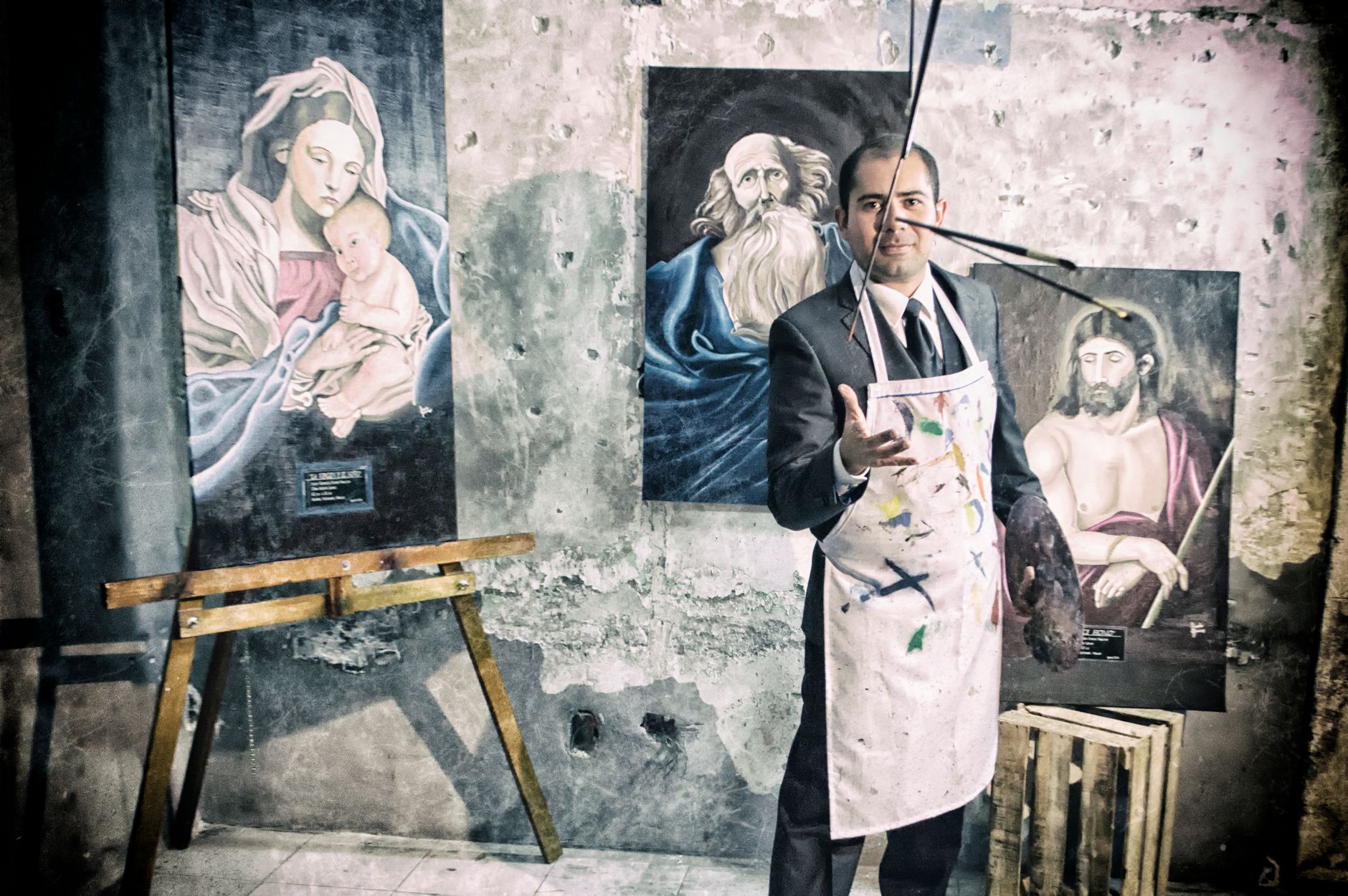
Unveiling the Legacy: Famous Renaissance Artists and Works
famous Renaissance artists and works

Unveiling the Legacy: Famous Renaissance Artists and Works

Journey through the golden age of art and discover the visionaries whose creations continue to inspire.

Explore Masterpieces Now

Key Takeaways

  • ✓ The Renaissance (c. 1300-1600) was a period of profound cultural, artistic, and scientific rebirth in Europe.
  • ✓ Central to the Renaissance was a renewed interest in classical antiquity, humanism, and scientific inquiry.
  • ✓ Italian city-states like Florence, Rome, and Venice were epicenters of Renaissance artistic innovation.
  • ✓ Key artistic developments included linear perspective, chiaroscuro, sfumato, and a focus on human anatomy and emotion.

How It Works

1
Understand the Historical Context

Before diving into individual artists, grasp the socio-political and intellectual climate of the Renaissance. This period followed the Middle Ages, marked by a shift from spiritual focus to human potential and discovery.

2
Identify Key Artistic Movements

Recognize the distinct phases within the Renaissance, such as the Early, High, and Late Renaissance, and how artistic styles evolved. Each phase brought new techniques and philosophical approaches to art.

3
Explore Influential Patrons

Learn about the powerful families and institutions, like the Medici and the Papacy, who commissioned and supported these artists. Their patronage was crucial for the creation of many masterpieces.

4
Analyze Masterpieces and Techniques

Study specific works by famous artists, paying attention to their innovative techniques, symbolism, and impact. Understanding the artistic methods reveals the genius behind their enduring appeal.

The Dawn of Genius: Early Renaissance Masters and Their Innovations
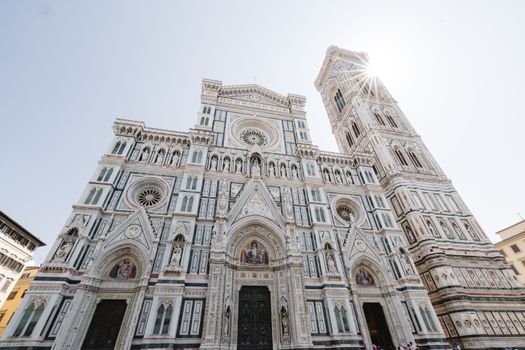
Stunning view of Florence Cathedral and Giotto's Bell Tower under a bright sky. Photo: Sebastian Luna / Pexels
The Early Renaissance, roughly spanning from the late 13th to the early 15th century, laid the foundational groundwork for the artistic explosion that would follow. This period was characterized by a gradual departure from the rigid, symbolic styles of the Byzantine and Gothic eras, moving towards a more naturalistic and human-centered approach. Artists began to experiment with depth, perspective, and the depiction of human emotion with unprecedented realism. One of the most pivotal figures of this era was Giotto di Bondone (c. 1267–1337). Often considered the father of Renaissance painting, Giotto broke away from the traditional flat, stylized figures, introducing three-dimensionality and emotional depth into his frescoes. His cycle of frescoes in the Scrovegni Chapel in Padua, particularly 'The Lamentation of Christ,' showcases his revolutionary approach to narrative painting, using dramatic composition and expressive figures to evoke profound human feeling. Giotto's influence was immense, setting a new standard for artistic representation that emphasized observation of the natural world. Learn more about the evolution of art during this transformative time. Following Giotto, the early 15th century saw further dramatic advancements, particularly in Florence. Filippo Brunelleschi (1377–1446), though primarily an architect renowned for the dome of Florence Cathedral, is also credited with rediscovering and formalizing linear perspective. This mathematical system allowed artists to create the illusion of three-dimensional space on a two-dimensional surface, revolutionizing painting and drawing. Brunelleschi's practical demonstrations of perspective deeply influenced painters like Masaccio (1401–1428). Masaccio’s frescoes, such as 'The Holy Trinity' in Santa Maria Novella, are masterpieces of early perspective and monumental figure painting. He combined Brunelleschi's perspective with Giotto's naturalism, creating figures with weight and volume, bathed in a realistic light source. His work marked a definitive break from medieval art, establishing the principles that would define High Renaissance painting. Another significant figure was Donatello (c. 1386–1466), a sculptor whose works like 'David' (c. 1440s) were groundbreaking. His bronze 'David' was the first freestanding nude sculpture since antiquity, depicting the biblical hero with a naturalistic pose and youthful vulnerability. Donatello's profound understanding of human anatomy and emotion, combined with his innovative use of materials, made him a titan of Early Renaissance sculpture. These early masters collectively paved the way for the artistic titans who would dominate the High Renaissance, demonstrating an insatiable curiosity and a relentless pursuit of artistic perfection that characterizes the entire era.

The Zenith of Creativity: High Renaissance Icons and Their Masterpieces
A warm, candlelit setting featuring an astrology natal chart, perfect for divination themes. Photo: Ксения Вохминцева / Pexels
The High Renaissance, roughly from the late 15th to the early 16th century, represents the absolute peak of artistic achievement during the Renaissance. This relatively brief but intensely productive period saw the emergence of some of the most universally recognized and celebrated famous Renaissance artists and works. Three names stand out above all others, often referred to as the 'three giants' of the High Renaissance: Leonardo da Vinci, Michelangelo, and Raphael. Leonardo da Vinci (1452–1519) was the quintessential Renaissance man – a painter, sculptor, architect, musician, scientist, inventor, anatomist, geologist, cartographer, botanist, and writer. His insatiable curiosity and meticulous observation of the natural world profoundly influenced his art. His most famous painting, the 'Mona Lisa' (c. 1503–1519), is renowned for its enigmatic smile, achieved through his revolutionary use of sfumato, a technique of subtle gradations of light and shadow that creates a soft, hazy effect. Another masterpiece, 'The Last Supper' (c. 1495–1498), frescoed in the refectory of the Santa Maria delle Grazie in Milan, captures the dramatic moment Christ announces his betrayal, with each apostle displaying a distinct, psychologically profound reaction. Leonardo's anatomical studies and scientific investigations directly informed the realism and vitality of his figures. Michelangelo Buonarroti (1475–1564) was a master of many disciplines, but considered himself primarily a sculptor. His colossal statue of 'David' (1501–1504), carved from a single block of marble, is a testament to his unparalleled skill in depicting the human form. Unlike Donatello's earlier version, Michelangelo's 'David' portrays the hero just before his encounter with Goliath, exuding confident readiness and immense physical power. His most famous painting commission was the ceiling of the Sistine Chapel (1508–1512) in the Vatican, a monumental undertaking that depicts scenes from the Book of Genesis. The sheer scale, complexity, and artistic brilliance of the Sistine Chapel ceiling, particularly 'The Creation of Adam,' solidifies Michelangelo's place as one of history's greatest artists. Later, he also painted 'The Last Judgment' (1536–1541) on the altar wall of the chapel. Raphael Sanzio (1483–1520), though dying young, produced an extraordinary body of work characterized by clarity, harmony, and grace. His frescoes in the Vatican's Stanze della Segnatura, particularly 'The School of Athens' (c. 1509–1511), exemplify the High Renaissance ideal of humanism and classical learning. This masterpiece brings together ancient Greek philosophers and scientists in a grand architectural setting, showcasing Raphael's mastery of composition, perspective, and idealized human forms. His numerous Madonnas, like the 'Sistine Madonna' (c. 1512), are celebrated for their tender beauty and spiritual serenity. These three masters, each with their unique genius, elevated art to new heights, creating works that continue to captivate and inspire across centuries, defining the very essence of the Renaissance ideal.

Beyond the Trio: Other Notable Famous Renaissance Artists and Their Contributions
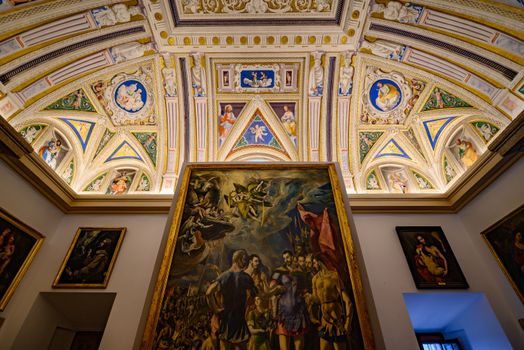
Intricate ceiling and classical paintings in a Madrid art museum. Photo: Osviel Rodriguez Valdés / Pexels
While Leonardo, Michelangelo, and Raphael often dominate discussions of the High Renaissance, numerous other artists made profound and lasting contributions to the famous Renaissance artists and works canon. Their innovative techniques, distinct styles, and influential creations expanded the artistic landscape and cemented the Renaissance as a golden age of creativity. One such figure was Sandro Botticelli (c. 1445–1510), an Early Renaissance Florentine painter whose work is characterized by its lyrical beauty, graceful lines, and allegorical themes. His iconic paintings, 'The Birth of Venus' (c. 1485) and 'Primavera' (c. 1482), are celebrated for their mythological content, vibrant colors, and ethereal figures, departing from the purely religious focus of many contemporaries. Botticelli's unique style, with its delicate charm and poetic sensibility, stands as a testament to the diverse artistic expressions flourishing in Florence. His art often reflects the intellectual and philosophical currents of Neoplatonism prevalent in Medici circles. Another pivotal artist was Titian (c. 1488–1576), the undisputed master of Venetian painting. Titian's work is celebrated for its revolutionary use of color, light, and expressive brushwork, which created a sense of atmosphere and dynamism previously unseen. His portraits, such as 'Emperor Charles V on Horseback' (1548), are renowned for their psychological depth and luxurious textures. His mythological paintings, like 'Bacchus and Ariadne' (1522–1523), showcase his mastery of vibrant palettes and dramatic compositions. Titian's influence extended across Europe, shaping the development of Baroque art. His technique of building up layers of glazes to achieve rich, luminous colors was particularly innovative and widely admired. Andrea Mantegna (c. 1431–1506), a Paduan painter, was a master of perspective and illusionism. His frescoes in the Camera degli Sposi (Bridal Chamber) in Mantua, particularly the 'Oculus' on the ceiling, create breathtaking trompe l'oeil effects, making the viewer feel as if they are looking directly into the sky. Mantegna’s meticulous detail and strong use of foreshortening brought a dramatic realism to his work. His understanding of classical antiquity is evident in his precise rendering of architectural elements and sculptural forms. Correggio (c. 1489–1534), active in Parma, was a pioneer of illusionistic ceiling painting, anticipating the Baroque style. His frescoes in the dome of Parma Cathedral, depicting the 'Assumption of the Virgin,' create a dizzying sense of upward movement and divine ecstasy, dissolving architectural boundaries through dynamic figures and swirling clouds. Correggio's soft, luminous colors and graceful figures provided a distinct alternative to the Florentine and Roman emphasis on sculptural form. These artists, alongside others like Giorgione, Veronese, and Tintoretto, collectively enriched the Renaissance, proving that innovation and artistic brilliance were not confined to a select few, but were a widespread phenomenon that transformed the very definition of art itself. Their combined legacies continue to be studied and admired, offering endless insights into the creative spirit of the era. Discover more about the regional variations in Renaissance art and how local styles contributed to the overall grandeur.

Understanding the Impact: Tips for Appreciating Renaissance Art

Appreciating famous Renaissance artists and works goes beyond simply recognizing names and titles; it involves understanding the context, techniques, and enduring influence of this extraordinary period. To truly engage with these masterpieces, consider these tips: * **Research the Patronage:** Many Renaissance works were commissioned by wealthy families, popes, or guilds. Understanding who commissioned the art and why can reveal hidden meanings, political statements, or personal sentiments embedded within the piece. For example, the Medici family's patronage in Florence profoundly shaped the city's artistic output. * **Study the Symbolism:** Renaissance art is rich in symbolism, often drawing from classical mythology, Christian theology, and contemporary philosophy. Familiarize yourself with common symbols – a specific flower, animal, or gesture – to unlock deeper layers of meaning in a painting or sculpture. For instance, lilies often symbolize purity, while lions can represent strength or evangelists. * **Analyze the Techniques:** Pay attention to the artistic innovations that defined the Renaissance. Look for evidence of linear perspective, chiaroscuro (the use of strong contrasts between light and dark), sfumato (soft, hazy transitions between colors and tones), and contrapposto (a natural, weight-shifted pose in sculpture). Recognizing these techniques enhances your appreciation of the artists' skill and ingenuity. * **Consider the Viewer's Experience:** Renaissance artists often designed their works for specific locations and intended viewing experiences. Imagine seeing Michelangelo's 'David' standing in the Piazza della Signoria or experiencing the immersive narrative of Giotto's frescoes in the Scrovegni Chapel. The context of display is crucial to understanding the artist's intent and the work's impact. * **Visit Museums and Galleries:** There's no substitute for seeing famous Renaissance artists and works in person. The scale, texture, and vibrant colors of these masterpieces are best appreciated firsthand. Major collections can be found in the Uffizi Gallery in Florence, the Vatican Museums in Rome, the Louvre in Paris, and the Metropolitan Museum of Art in New York. * **Read Primary and Secondary Sources:** Delve into historical accounts, biographies of artists like Giorgio Vasari's 'Lives of the Artists,' and modern art historical analyses. These resources provide invaluable insights into the lives, motivations, and artistic philosophies of the Renaissance masters. Avoid the mistake of viewing Renaissance art solely through a modern lens; try to understand it within its historical and cultural framework.

Comparison

FeatureLeonardo da VinciMichelangeloRaphaelTitian
Primary FocusPainter, Inventor, ScientistSculptor, Painter, ArchitectPainter, ArchitectPainter (Venetian School)
Signature TechniqueSfumato, ChiaroscuroContrapposto, Anatomical detailClarity, Harmony, GraceColor, Light, Expressive Brushwork
Famous Work (Painting)Mona Lisa, The Last SupperSistine Chapel CeilingSchool of Athens, Sistine MadonnaBacchus and Ariadne, Venus of Urbino
Famous Work (Sculpture)✗ (Limited)David, Pietà✗ (Limited)✗ (Limited)
Impact on ArtNaturalism, Psychological depthMonumental scale, Human formIdealized beauty, CompositionColorism, Atmospheric effects

What Readers Say

"This article on famous Renaissance artists and works was incredibly thorough and engaging. I feel like I've gained a much deeper understanding of the period and its major players. The descriptions of their techniques were particularly helpful."

Eleanor V. · Boston, MA

"As an art history enthusiast, I found this piece to be a fantastic overview. It didn't just list artists; it explained their innovations and placed them within the broader context of the Renaissance. Truly a premium read!"

Marcus L. · San Francisco, CA

"I've always been intimidated by art history, but this guide to famous Renaissance artists and works made it accessible and exciting. I now have a solid foundation and a list of specific artworks to look for when I visit museums."

Sophia G. · Chicago, IL

"While comprehensive, I would have loved to see a bit more on the Northern Renaissance artists to get a broader perspective. However, the depth on the Italian masters was exceptional and very well-researched, making it a valuable resource."

David R. · Austin, TX

"This article is a must-read for anyone starting their journey into art history or looking for a refresher on famous Renaissance artists and works. It provides a structured way to understand the period's complexity and beauty."

Jessica M. · New York, NY

Frequently Asked Questions

Who are considered the three most famous Renaissance artists?

The three most famous Renaissance artists, often referred to as the 'three giants' of the High Renaissance, are Leonardo da Vinci, Michelangelo Buonarroti, and Raphael Sanzio. Each of them contributed masterpieces that defined the artistic and cultural zenith of the period, influencing generations of artists and shaping Western art history.

Was the Renaissance only about painting and sculpture?

No, while painting and sculpture are prominent, the Renaissance was a period of immense innovation across many fields. It also saw significant advancements in architecture (e.g., Brunelleschi), literature (e.g., Shakespeare), science (e.g., Copernicus), and philosophy (e.g., Machiavelli), reflecting a holistic rebirth of learning and human endeavor.

How did linear perspective change Renaissance art?

Linear perspective, rediscovered and formalized by Brunelleschi, revolutionized Renaissance art by allowing artists to create the illusion of three-dimensional space on a two-dimensional surface. This mathematical system brought unprecedented realism and depth to paintings, making figures and environments appear more natural and believable to the viewer.

What role did patronage play in the creation of famous Renaissance works?

Patronage was absolutely crucial. Wealthy families like the Medici, powerful Popes, and various guilds commissioned a vast majority of the famous Renaissance works. Their financial support not only provided artists with the means to create but also often dictated the themes and scale of the artworks, driving artistic competition and innovation.

How does Renaissance art compare to Medieval art?

Renaissance art marked a significant departure from Medieval art. While Medieval art was primarily religious, symbolic, and often flat with stylized figures, Renaissance art emphasized humanism, naturalism, and realism. It introduced techniques like linear perspective, chiaroscuro, and a focus on anatomical accuracy and emotional expression, mirroring a renewed interest in classical antiquity.

Who should study famous Renaissance artists and works?

Anyone with an interest in art history, cultural studies, European history, or simply a curiosity about human creativity should study famous Renaissance artists and works. It offers profound insights into a pivotal period that shaped modern thought, aesthetics, and our understanding of human potential.

Are there any ethical considerations regarding Renaissance art, such as sourcing of materials?

While the primary ethical concerns of modern art often revolve around cultural appropriation or environmental impact, historical ethical considerations for Renaissance art might include the use of materials sourced through exploitative labor, the patronage by powerful figures involved in political intrigues, or the destruction of earlier artworks to make way for new commissions. However, specific modern ethical scrutiny is less common for the sourcing itself.

What is the future trend in studying famous Renaissance artists and works?

Future trends in studying famous Renaissance artists and works increasingly involve digital humanities, virtual reality tours of historical sites and museums, and advanced imaging techniques to uncover hidden layers or original colors of masterpieces. There's also a growing emphasis on interdisciplinary studies, connecting art with science, philosophy, and socio-economic history more deeply.

Embark on your own journey of discovery through the masterpieces of the past. Explore the profound impact and timeless beauty of famous Renaissance artists and works, and let their genius inspire you today.

Topics: famous Renaissance artists and worksRenaissance art historyItalian Renaissance paintersmasterpieces of the Renaissanceartistic innovation Renaissance
Leo List

IE Escorts NO Escorts US Escorts NZ Escorts AU Escorts
Brampton weed
Adultwork EstrelaBet Vai de Bet R7 Bet Betão Galera Bet Rainbet Bet9ja Shop SportyBet BetKing Sisal Loto Foot Hollywoodbets YesPlay Odibets RushBet Jugabet BetWarrior BetCity MSport betPawa Fortebet