Exploring the Different Types of Sculpture Art
June 22, 2026 17 min read 3,318 words
Journey through millennia of artistic innovation and discover the myriad ways sculptors have shaped our world.
Start Your Exploration
The Foundations: Traditional Sculpture Techniques and Materials
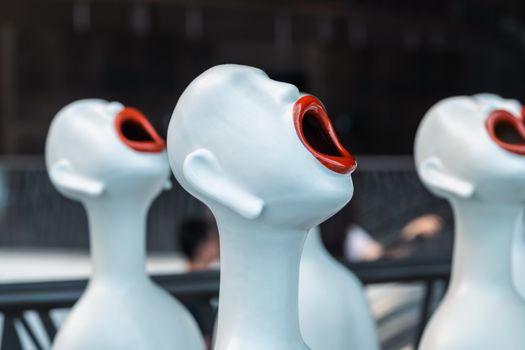 Photo: 小和尚 温柔的 / Pexels
Sculpture, at its heart, is the art of giving form to material in three dimensions. For millennia, artists have engaged with tangible substances to create objects that occupy space and evoke emotion. Understanding the different types of sculpture art begins with recognizing the foundational techniques that have shaped its history. The four classical methods – carving, modeling, casting, and assembling – represent distinct approaches to transforming raw materials into compelling artistic statements. Each method demands unique skills, tools, and a deep understanding of the chosen medium's properties.
Carving, perhaps the most ancient technique, involves subtracting material from a larger block to reveal the desired form. Stone, wood, and ivory are common materials for carving, each presenting its own challenges and rewards. Stone carving, exemplified by the masterpieces of ancient Greece and Rome, requires immense physical strength, precision, and patience. Artists must chip away at marble, granite, or limestone, always mindful that a single misstep can be irreversible. The renowned works of Michelangelo, such as 'David,' stand as testaments to the sublime beauty achievable through this laborious process. Wood carving, while often less demanding physically, requires an understanding of grain patterns and the material's inherent strength. African, Oceanic, and Native American cultures have long excelled in wood carving, creating intricate masks, totems, and figures imbued with spiritual significance. The tactile quality and organic warmth of carved wood offer a stark contrast to the cold grandeur of stone.
Modeling, conversely, is an additive process where a pliable material is shaped and built up. Clay is the quintessential modeling material, allowing for spontaneous expression and easy modification. Sculptors can mold, pinch, and smooth clay to create forms ranging from small figurines to life-sized portraits. This technique often serves as a preliminary step for other processes, particularly casting, as a clay model can be used to create a mold. Wax, plaster, and even some polymers are also used in modeling, offering varying degrees of malleability and permanence. The immediacy of modeling allows artists to capture gestures and expressions with remarkable fluidity, making it a favorite for portraiture and figurative studies.
Learn more about the expressive potential of different art forms.
Casting involves creating a mold from an original model (often made by modeling or carving) and then pouring a liquid material, such as molten metal, resin, or plaster, into the mold. Once the material hardens, the mold is removed, revealing a duplicate of the original form. Bronze casting, using the lost-wax method, has been a revered technique since antiquity, prized for its durability, ability to capture fine detail, and the rich patina it develops over time. The 'Perseus with the Head of Medusa' by Benvenuto Cellini is a prime example of the monumental achievements possible through bronze casting. This method allows for the creation of multiple editions of a single sculpture, making it a crucial technique for large-scale production and dissemination of artistic ideas. The intricate process of mold-making and pouring requires significant technical expertise and a deep understanding of metallurgy or material science.
Finally, assembling, or construction, is a technique where various pre-existing components or fabricated elements are joined together to create a new form. This method gained significant prominence in the 20th century with the rise of modernism and the availability of new industrial materials. Artists began incorporating found objects, scrap metal, wood scraps, and other unconventional items into their work, challenging traditional notions of what constitutes sculpture. Assemblage allows for boundless creativity and often carries symbolic meaning through the juxtaposition of disparate elements. Pablo Picasso's 'Bull's Head' (made from a bicycle seat and handlebars) is an iconic early example of assemblage, demonstrating how everyday objects can be transformed into powerful artistic statements. This approach often blurs the lines between sculpture and other art forms, encouraging viewers to reconsider their perceptions of art and reality.
Evolution and Innovation: Modern and Contemporary Sculpture
As the world progressed through the industrial age and into the 20th and 21st centuries, the landscape of sculpture underwent radical transformations. The traditional boundaries of material, technique, and subject matter were challenged, leading to an explosion of creativity and the emergence of entirely new different types of sculpture art. Modern and contemporary sculpture broke away from the classical emphasis on representation and permanence, embracing abstraction, ephemerality, and conceptual depth. This period saw sculptors exploring new philosophies, questioning the very definition of art, and utilizing technology and unconventional materials to push the limits of artistic expression.
One significant shift was the rise of abstraction. Artists like Constantin Brâncuși stripped forms down to their essential elements, focusing on purity of shape and material. His polished bronze and marble works, such as 'Bird in Space,' emphasize fluidity, light, and the inherent beauty of the material itself, moving away from narrative or descriptive content. Cubist sculptors like Alexander Archipenko fragmented and reassembled forms, presenting multiple viewpoints simultaneously, mirroring the innovations seen in painting. The mid-20th century saw the emergence of kinetic sculpture, pioneered by artists like Alexander Calder, whose 'mobiles' introduced movement and air currents as integral components of the artwork. These delicate, balancing structures challenge the static nature traditionally associated with sculpture, creating ever-changing visual compositions.
Minimalism, another influential movement, emerged in the 1960s, characterized by extreme simplicity of form, often using industrial materials like steel, aluminum, and Plexiglas. Artists such as Donald Judd and Carl Andre created geometric forms, repetitive structures, and installations that emphasized the object's physical presence and its interaction with the surrounding space. The viewer's perception and experience became paramount, often challenging traditional notions of aesthetic beauty in favor of intellectual engagement. Land Art, or Earth Art, took sculpture out of the gallery and into the natural environment. Artists like Robert Smithson created monumental works using natural elements, such as his iconic 'Spiral Jetty' in the Great Salt Lake. These site-specific installations are often subject to natural erosion and change, embracing impermanence and the vastness of landscape as part of the artistic statement.
Conceptual art, which prioritizes the idea or concept behind the artwork over its material form, also profoundly impacted sculpture. In conceptual sculpture, the physical object might be minimal, temporary, or even absent, with the documentation or description of the idea becoming the artwork itself. Artists like Sol LeWitt created 'instructions' for sculptures that could be executed by others, highlighting the dematerialization of the art object. Performance art, often involving the artist's body as a sculptural element in time and space, further blurred the lines between sculpture, theater, and other disciplines. Contemporary sculpture continues to be incredibly diverse, incorporating digital technologies, light, sound, video, and new media. Artists are experimenting with 3D printing, virtual reality, and interactive installations, creating immersive experiences that challenge conventional understandings of form and space. From Jeff Koons' polished stainless steel 'Balloon Dog' to Olafur Eliasson's climate-conscious installations, contemporary sculpture reflects the complex and ever-evolving concerns of our global society.
Specialized Forms and Contexts: Beyond the Pedestal
While the traditional methods and modern movements provide a foundational understanding, sculpture also manifests in numerous specialized forms and contexts, each with its unique characteristics and purposes. These different types of sculpture art extend beyond the conventional gallery or museum setting, engaging with public spaces, incorporating light and sound, or even existing solely in digital realms. Understanding these specialized forms enriches our appreciation for the versatility and adaptability of three-dimensional art, highlighting how sculpture continues to evolve and intersect with various aspects of life and technology.
Public art, for instance, represents a significant category of sculpture designed for public spaces, often commissioned by cities, governments, or private organizations. These works range from commemorative monuments and civic statues to abstract installations that enhance urban landscapes. Public sculptures are often monumental in scale, built to withstand the elements, and intended to be accessible to a broad audience. They can serve to beautify a space, provoke thought, commemorate historical events, or foster a sense of community. Notable examples include Anish Kapoor's 'Cloud Gate' (The Bean) in Chicago or the Vietnam Veterans Memorial by Maya Lin in Washington D.C., both of which have become iconic landmarks and powerful points of public interaction. The challenges of public art include site-specificity, community engagement, and durability, requiring a unique blend of artistic vision and practical consideration.
Discover the impact of art in public spaces.
Installation art, a highly influential contemporary form, involves creating a site-specific artwork that transforms an entire space. Unlike traditional sculptures, which are individual objects, installations often immerse the viewer within the artwork itself, engaging multiple senses. These can be temporary or permanent and may incorporate a wide array of materials, including light, sound, video, and found objects. Artists like Yayoi Kusama create mesmerizing 'Infinity Rooms' that use mirrors and lights to create an illusion of endless space, while others might construct intricate environments that tell a story or comment on social issues. The experience of walking through, around, or even within an installation is central to its meaning, making the viewer an active participant rather than a passive observer.
Another fascinating category is environmental sculpture, which often overlaps with Land Art but can also refer to works that interact with or are created from environmental factors. This includes sculptures that are designed to filter air, collect rainwater, or even grow over time. Artists might use living plants as a medium, creating 'living sculptures' that change with the seasons. Eco-art, a subgenre, often carries explicit messages about environmental conservation and sustainability, using art as a tool for advocacy and awareness. The material choice and artistic intention are deeply intertwined with ecological concerns.
Digital sculpture, a relatively new but rapidly expanding field, leverages computer software and digital fabrication technologies. Artists can design complex forms in 3D modeling programs, which can then be materialized through 3D printing, CNC milling, or laser cutting. This allows for the creation of intricate geometries and structures that would be impossible or impractical to achieve through traditional handcrafting. Digital sculpture also includes virtual reality (VR) and augmented reality (AR) experiences, where sculptures exist purely in digital space, offering interactive and immersive encounters without physical presence. This realm opens up new possibilities for accessibility, collaboration, and the very definition of what a 'sculpture' can be. These specialized forms demonstrate that sculpture is not a static art form but a dynamic and ever-evolving field, continually pushing boundaries and reflecting the complexities of human experience and technological advancement.
Choosing Your Medium: Tips for Aspiring Sculptors
For anyone drawn to the tactile world of three-dimensional art, exploring the different types of sculpture art can be both inspiring and daunting. The vast array of techniques, materials, and conceptual approaches means there's a perfect fit for almost any artistic inclination. If you're an aspiring sculptor, or simply curious about starting a new creative journey, here are some tips for navigating this rich landscape and finding your preferred medium and method.
**1. Start Simple with Modeling Materials:**
* **Clay (air-dry or polymer):** This is an excellent starting point due to its malleability and forgiving nature. You can easily add, subtract, and reshape without significant investment in tools. Air-dry clay doesn't require a kiln, making it accessible for beginners. Polymer clay can be baked in a home oven. These materials allow you to quickly translate ideas into three-dimensional forms and develop your spatial awareness.
* **Plaster:** While a bit messier, plaster can be poured into molds or built up over an armature. It's inexpensive and dries hard, allowing for carving or sanding once set.
**2. Experiment with Found Objects for Assemblage:**
* **Scrap materials:** Collect interesting objects from around your home, thrift stores, or even nature. Old clock parts, pieces of wood, metal scraps, or plastic toys can be combined to create unique sculptures. This method encourages resourcefulness and imaginative thinking, often leading to unexpected results. Adhesives like strong glues or basic soldering kits can help join elements.
**3. Consider the Challenges of Subtractive Methods:**
* **Soap or soft stone carving:** Before tackling marble, try carving softer materials. Soap is surprisingly effective for learning basic carving techniques and understanding how to remove material to reveal a form. Alabaster or soapstone are softer stones that can be carved with hand tools, offering a gentler introduction to stone carving than granite or marble.
* **Wood carving:** If you enjoy working with natural materials, wood carving can be very rewarding. Start with soft woods like basswood or pine and invest in a basic set of carving tools. Understanding wood grain is crucial to prevent splitting and achieve desired textures.
**4. Explore Casting (with caution and guidance):**
* **Plaster casting:** A relatively safe and inexpensive way to learn the basics of mold-making and casting. You can cast from simple objects or models you've made. This teaches you about negative space and how to replicate forms.
* **Resin casting:** Requires more ventilation and safety precautions but offers a wider range of finishes and colors. It's a good step up for creating more durable cast pieces.
**5. Embrace Digital Tools (if technologically inclined):**
* **3D modeling software:** Programs like Blender (free), SketchUp, or ZBrush allow you to design sculptures virtually. This can be a fantastic way to visualize complex forms before attempting them physically. Many libraries or community centers offer access to 3D printers, allowing you to bring your digital designs into the physical world.
**Key Considerations for Choosing Your Path:**
* **Tools and Cost:** Some mediums require significant investment in specialized tools (e.g., stone carving), while others are more accessible (e.g., clay, assemblage).
* **Workspace:** Consider the space you have available. Carving can be dusty, casting can be messy, and large installations require ample room.
* **Safety:** Always prioritize safety. Wear appropriate protective gear, ensure good ventilation, and understand the risks associated with tools and materials.
* **Durability and Longevity:** Think about whether you want your sculpture to be permanent or temporary. Materials like bronze or stone offer longevity, while ephemeral installations are designed to decay or be deconstructed.
Ultimately, the best way to discover your preferred sculptural path is through hands-on experimentation. Don't be afraid to try different types of sculpture art, make mistakes, and learn from every material you touch. The journey of sculpting is as much about discovery as it is about creation.