✓ The Renaissance (c. 1300-1600) marked a rebirth of classical ideals in art, science, and philosophy.
✓ It originated in Florence, Italy, before spreading across Europe.
✓ Key periods include the Early Renaissance, High Renaissance, and Northern Renaissance.
✓ Artists like Leonardo da Vinci, Michelangelo, and Raphael redefined artistic techniques and themes.
How It Works
1
Understand the Precursors
Before diving into the Renaissance, grasp the foundational societal and intellectual shifts that set the stage for its emergence. This includes the decline of the Middle Ages and the rise of humanism.
2
Explore Key Italian Periods
Focus on the distinct phases of the Italian Renaissance: Proto-Renaissance, Early Renaissance, and High Renaissance. Each period introduced significant stylistic and thematic developments.
3
Discover Northern Renaissance
Recognize the unique characteristics and artists of the Northern Renaissance, which developed concurrently but with different emphases. This includes its focus on realism and oil painting.
4
Analyze Masterpieces & Legacy
Examine iconic artworks and their creators, understanding their techniques, symbolism, and lasting influence. This critical analysis helps solidify your understanding of the era's impact.
The Dawn of a New Era: Proto-Renaissance and Early Renaissance Art
Photo: Roland Käser / Pexels
The art history timeline Renaissance doesn't begin abruptly but evolves from the late medieval period, often referred to as the Proto-Renaissance (c. 1300-1400). This period, primarily centered in Italy, saw the first stirrings of a departure from the rigid, symbolic forms of Byzantine art towards a more naturalistic representation of the human form and space. Artists like Giotto di Bondone were pivotal, breaking new ground with their emotive figures and attempts at three-dimensional illusionism in frescoes such as those in the Scrovegni Chapel. Giotto's innovations laid essential groundwork, demonstrating a nascent understanding of perspective and human psychology that would become hallmarks of the later Renaissance. His figures, while still somewhat stylized, possessed a weight and emotional depth rarely seen before, suggesting a shift towards human-centered narratives. The Black Death in the mid-14th century temporarily halted artistic progress but also, paradoxically, contributed to a renewed focus on individual experience and human mortality, further fueling the humanist ideals that would define the Renaissance.
As the 15th century dawned, the Early Renaissance (c. 1400-1490) truly took hold, primarily in Florence. This period was characterized by a fervent rediscovery of classical Greek and Roman art, philosophy, and architectural principles. Humanism, an intellectual movement that emphasized human potential and achievement rather than divine authority, became the guiding philosophy. Artists and patrons alike were inspired by ancient texts and artifacts, seeking to emulate the classical ideals of beauty, harmony, and proportion. Filippo Brunelleschi revolutionized architecture with his engineering marvels like the Florence Cathedral dome and his scientific approach to linear perspective, which provided artists with a mathematical system for creating realistic three-dimensional space on a two-dimensional surface. This was a game-changer for painting, allowing artists like Masaccio to create incredibly lifelike and spatially coherent scenes. His frescoes in the Brancacci Chapel, particularly 'The Tribute Money,' showcased monumental figures rendered with unprecedented realism, chiaroscuro (light and shadow to create volume), and a mastery of perspective that made the painted world seem tangible. Donatello, another Florentine master, brought classical naturalism to sculpture, reviving the contrapposto pose and creating powerful, emotionally charged bronze and marble figures. His 'David' is often cited as the first freestanding nude sculpture since antiquity, embodying the new humanist spirit. These foundational developments in the Early Renaissance established the visual language and intellectual framework that would culminate in the unparalleled achievements of the High Renaissance. The emphasis on detailed observation, anatomical correctness, and the innovative use of oil paint (especially in the North) marked a profound shift in artistic practice, moving art closer to a scientific inquiry into the visible world. Understanding this evolution is crucial for anyone studying the history of art, as these early innovations set the stage for centuries of artistic development.
The Pinnacle of Achievement: High Renaissance Masterpieces and Masters
Photo: Magda Ehlers / Pexels
The High Renaissance (c. 1490-1527) represents the zenith of artistic achievement within the art history timeline Renaissance. This relatively brief but incredibly prolific period saw the convergence of artistic genius, intellectual inquiry, and wealthy patronage, primarily in Rome and Florence. The three titans of this era – Leonardo da Vinci, Michelangelo, and Raphael – elevated art to an unprecedented level of technical mastery, emotional depth, and intellectual sophistication. Leonardo da Vinci, often considered the quintessential Renaissance man, embodied the era's spirit of curiosity and innovation. His scientific investigations into anatomy, geology, and optics profoundly informed his art. Works like the 'Mona Lisa' captivate with their enigmatic smile and sfumato technique, a subtle blending of colors and tones that creates a soft, hazy atmospheric effect, blurring contours and allowing for a nuanced play of light and shadow. His 'Last Supper' is a masterpiece of psychological drama and compositional ingenuity, capturing the precise moment of revelation with profound emotional resonance. Leonardo's meticulous observation of the natural world and his experimental approach to painting pushed the boundaries of what art could achieve.
Michelangelo Buonarroti, a sculptor, painter, architect, and poet, was driven by a deep spiritual intensity and a profound understanding of the human form. His 'David,' carved from a single block of marble, is a powerful symbol of Florentine liberty and a testament to his unparalleled anatomical knowledge and ability to imbue stone with life and emotion. The Sistine Chapel ceiling, a monumental fresco cycle depicting scenes from Genesis, is perhaps his most ambitious and awe-inspiring work. The vibrant colors, dynamic compositions, and heroic scale of figures like 'The Creation of Adam' showcase his mastery of human anatomy and his capacity for grand narrative. Michelangelo's work often expressed a profound sense of pathos and struggle, reflecting the turbulent spiritual climate of his time.
Raphael Sanzio, though tragically short-lived, achieved a synthesis of the clarity and grace of the Early Renaissance with the monumentality and emotional depth of his High Renaissance contemporaries. His frescoes in the Vatican's Stanze della Segnatura, particularly 'The School of Athens,' are celebrated for their harmonious composition, vibrant colors, and intellectual grandeur. This work gathers together ancient philosophers and scientists in a classical setting, symbolizing the synthesis of classical learning and Christian theology that was central to the Renaissance ideal. Raphael's Madonnas are renowned for their serene beauty and tender humanity, embodying an idealized feminine grace. The High Renaissance also saw significant architectural developments, with figures like Donato Bramante designing grand, classically inspired structures that emphasized symmetry and proportion. The Sack of Rome in 1527 by imperial troops is often cited as the symbolic end of the High Renaissance, leading to the dispersal of artists and a shift towards the more complex and dramatic style of Mannerism. This period remains a benchmark for artistic excellence, its influence reverberating through centuries of Western art.
Beyond Italy: The Rich Tapestry of the Northern Renaissance
Photo: Osviel Rodriguez Valdés / Pexels
While the Italian Renaissance flourished with its emphasis on classical ideals, humanism, and monumental forms, a distinct but equally significant movement, the Northern Renaissance (c. 1400-1600), developed concurrently across Flanders, the Netherlands, Germany, France, and England. This artistic tradition, while sharing some intellectual currents with its southern counterpart, diverged significantly in its stylistic approach, thematic focus, and preferred media. The Northern Renaissance placed a profound emphasis on meticulous detail, intense realism, and often, a deeper spiritual and moralistic tone, heavily influenced by the rise of Protestantism and a more personal form of piety. Unlike the Italian focus on idealized human forms and grand narratives, Northern artists often depicted everyday life, portraits, and allegorical scenes with an almost microscopic precision.
One of the most revolutionary contributions of the Northern Renaissance was the widespread adoption and perfection of oil painting. Artists like Jan van Eyck are credited with mastering the medium, allowing for unprecedented luminosity, rich color saturation, and the ability to render intricate textures and subtle variations of light. His 'Ghent Altarpiece' is a testament to this, filled with astonishing detail, from the individual strands of hair to the sparkling jewels and the texture of fabrics. Van Eyck's ability to capture the world with such fidelity created a sense of tangible reality that deeply impacted subsequent generations of artists. Robert Campin, another early Netherlandish master, also utilized oil paint to create works like the 'Merode Altarpiece,' embedding rich symbolism within seemingly ordinary domestic scenes, reflecting the era's integration of the sacred into the secular.
Later Northern Renaissance artists continued to explore realism and complex symbolism. Hieronymus Bosch, a Dutch painter, created highly imaginative and often disturbing allegorical works, most famously 'The Garden of Earthly Delights,' which teems with fantastical creatures and moral commentary. Albrecht Dürer, a German master, was not only a brilliant painter but also a pioneering printmaker, whose woodcuts and engravings spread Renaissance ideas and imagery across Europe. His self-portraits are remarkable for their psychological depth and confident assertion of the artist's status, a hallmark of the Renaissance's elevation of the individual. Pieter Bruegel the Elder, another Flemish master, focused on genre scenes, depicting peasant life with both humor and keen observation, offering a unique window into the social fabric of his time. His 'Hunters in the Snow' is a quintessential example of Northern Renaissance landscape painting, capturing the atmosphere and rhythm of daily life. The Northern Renaissance, with its distinct aesthetic and technical innovations, particularly in oil painting, offered a powerful counterpoint to the Italian tradition, proving that the spirit of rebirth could manifest in diverse and equally profound ways across the European continent. Its influence on later European art, particularly in portraiture and genre painting, is undeniable, making it an indispensable chapter in the global art narrative.
Enduring Legacy and Common Misconceptions of the Renaissance
Photo: Osviel Rodriguez Valdés / Pexels
The impact of the art history timeline Renaissance extends far beyond its chronological boundaries, profoundly shaping the trajectory of Western art, culture, and thought. The innovations in perspective, anatomy, chiaroscuro, and sfumato became fundamental elements of artistic training for centuries. The elevation of the artist from craftsman to intellectual, the emphasis on human potential and individual genius, and the integration of classical learning into contemporary expression all laid the groundwork for the Enlightenment and subsequent artistic movements. The Renaissance redefined the purpose and potential of art, moving it from primarily serving religious didacticism to exploring human experience, scientific inquiry, and aesthetic beauty for its own sake. Its masterpieces continue to inspire awe and study, forming the core curriculum of art history programs worldwide.
However, several common misconceptions about the Renaissance persist. One is that it was a sudden, unified explosion of creativity. As explored, it was a gradual evolution spanning centuries, with distinct regional variations and internal debates. Another misconception is that it was a period of universal progress and enlightenment for everyone. While intellectual and artistic elites flourished, many ordinary people still lived in difficult conditions, and the era saw its share of political turmoil, religious conflict, and social inequality. Furthermore, the term 'rebirth' can sometimes imply that the preceding Middle Ages were a 'dark' period entirely devoid of artistic and intellectual merit. In reality, the medieval period produced rich artistic traditions, complex philosophical thought, and significant architectural achievements, which the Renaissance often built upon rather than completely discarding.
Another misunderstanding is that the Renaissance was solely an Italian phenomenon. While Italy was its undeniable epicenter, the vibrant and distinct Northern Renaissance demonstrates that the spirit of rebirth manifested in diverse ways across Europe, with its own unique contributions and stylistic preferences. Finally, some might view Renaissance art as purely realistic. While realism was a major goal, it was often an *idealized* realism, aiming for perfection and harmony rather than a stark, unvarnished depiction of reality. Artists sought to capture the essence of beauty and truth, often elevating their subjects beyond mere photographic representation. Understanding these nuances allows for a more comprehensive appreciation of the Renaissance's complex and multifaceted legacy.
Here are some common misconceptions about the Renaissance to avoid:
* **Myth:** The Renaissance was a sudden, singular event.
* **Reality:** It was a gradual, multi-century evolution with distinct phases and regional variations.
* **Myth:** The Middle Ages were entirely 'dark' and contributed nothing to art or thought.
* **Reality:** The medieval period had rich artistic traditions and intellectual developments that influenced the Renaissance.
* **Myth:** The Renaissance was exclusively Italian.
* **Reality:** The Northern Renaissance developed concurrently with unique characteristics and artists.
* **Myth:** Renaissance art was purely photographic realism.
* **Reality:** It often sought an idealized realism, emphasizing beauty, harmony, and perfection.
* **Myth:** All people benefited equally from the Renaissance.
* **Reality:** Its advancements primarily impacted intellectual and artistic elites; social inequalities persisted.
Comparison
Feature
Early Renaissance
High Renaissance
Northern Renaissance
Timeline
c. 1400-1490
c. 1490-1527
c. 1400-1600
Key Centers
Florence, Italy
Rome, Florence
Flanders, Netherlands, Germany
Dominant Medium
Fresco, Tempera
Fresco, Oil
Oil Painting
Stylistic Focus
Linear perspective, anatomical study, emerging naturalism
Grand narratives, psychological depth, heroic figures
Religious devotion, moral allegory, daily life, landscapes
What Readers Say
★★★★★
"This article on the art history timeline Renaissance is incredibly thorough and well-organized. It beautifully connects the dots between different periods and artists, making complex concepts easy to grasp. A must-read for anyone interested in the era."
Sarah J. · New York, NY
★★★★★
"As an art history student, I found this guide to the Renaissance timeline invaluable. The detailed explanations of techniques like sfumato and chiaroscuro really deepened my understanding. Excellent resource!"
Mark D. · Los Angeles, CA
★★★★★
"I always struggled to differentiate between the Early and High Renaissance, but this article's clear breakdown helped me finally understand the nuances. My appreciation for art history timeline Renaissance has grown exponentially."
Emily R. · Chicago, IL
★★★★★
"The content is superb, offering deep insights into the art history timeline Renaissance. While I loved the depth, a few more visual examples would have made it perfect for a visual learner like me. Still, highly recommended."
David L. · Houston, TX
★★★★★
"This isn't just a timeline; it's a journey! The way it weaves together the cultural, philosophical, and artistic shifts of the Renaissance is captivating. It truly transformed how I view this pivotal period in art."
Sophia K. · Miami, FL
Frequently Asked Questions
What are the main periods of the Renaissance on an art history timeline?
The Renaissance is broadly divided into three main periods: the Early Renaissance (c. 1400-1490), the High Renaissance (c. 1490-1527), and the Northern Renaissance (c. 1400-1600), which developed concurrently but with distinct characteristics. Each period witnessed unique artistic innovations and stylistic developments that collectively define the era.
Why is Florence considered the birthplace of the Italian Renaissance?
Florence was a wealthy, independent city-state during the 14th and 15th centuries, fostering a unique blend of civic pride, intellectual curiosity, and extensive patronage from powerful families like the Medici. This environment allowed artists and thinkers to rediscover classical ideals and innovate in areas like linear perspective and human anatomy, laying the groundwork for the entire movement.
How did oil painting revolutionize art during the Renaissance?
Oil painting, particularly perfected in the Northern Renaissance, allowed for unprecedented color depth, luminosity, and the ability to create subtle tonal gradations (sfumato and chiaroscuro). Its slow drying time enabled artists to blend colors seamlessly and achieve highly realistic textures and atmospheric effects, revolutionizing portraiture and detailed narrative scenes.
What was the role of humanism in shaping Renaissance art?
Humanism was a key intellectual movement that emphasized human potential, achievement, and a renewed interest in classical Greek and Roman philosophy, literature, and art. In art, this translated into a focus on naturalistic human forms, individual portraiture, classical themes, and the elevation of the artist's status, moving away from purely religious, symbolic representations.
How does the Northern Renaissance differ from the Italian Renaissance?
While both shared a spirit of rebirth, the Northern Renaissance emphasized meticulous realism, intense detail, and often a deeper spiritual and moralistic tone, influenced by Protestantism. It excelled in oil painting, genre scenes, and symbolic narratives. The Italian Renaissance, conversely, focused more on idealized forms, classical proportions, monumental scale, and grand narratives, primarily in fresco and tempera.
Who were the three 'great masters' of the High Renaissance?
The three universally recognized great masters of the High Renaissance are Leonardo da Vinci, Michelangelo, and Raphael. Each contributed uniquely to the period: Leonardo with his scientific inquiry and sfumato, Michelangelo with his powerful anatomical forms and emotional depth, and Raphael with his harmonious compositions and graceful idealism.
Was the Renaissance a peaceful period for artists?
Not entirely. While patronage flourished, artists often faced intense competition, demanding patrons, and the political and religious turmoil of the era (e.g., the Sack of Rome in 1527). Their lives, though often elevated, were still subject to the uncertainties and conflicts of their time, requiring resilience and adaptability.
What is the lasting legacy of the Renaissance in modern art?
The Renaissance established foundational principles that continue to influence art, including linear perspective, anatomical accuracy, the use of light and shadow (chiaroscuro), and the concept of the artist as a genius. Its emphasis on human experience and the pursuit of beauty also set precedents for later movements, making it a cornerstone for understanding Western artistic development.
Embark on your own exploration of the art history timeline Renaissance. Dive deeper into its masterpieces, understand its pivotal figures, and appreciate how this transformative era continues to resonate in our world today. Let the spirit of rebirth inspire your artistic journey.

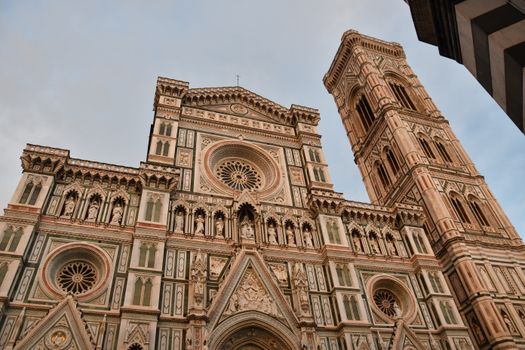 Photo: Roland Käser / Pexels
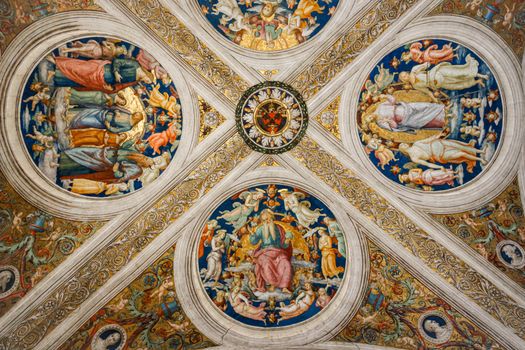 Photo: Magda Ehlers / Pexels
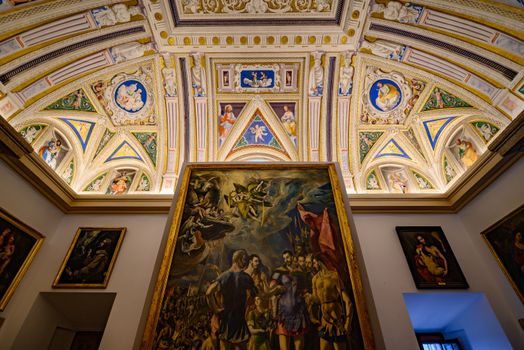 Photo: Osviel Rodriguez Valdés / Pexels
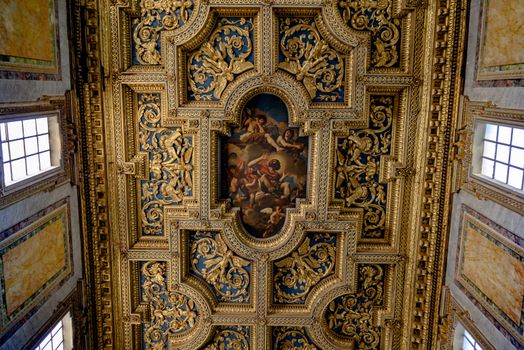 Photo: Osviel Rodriguez Valdés / Pexels